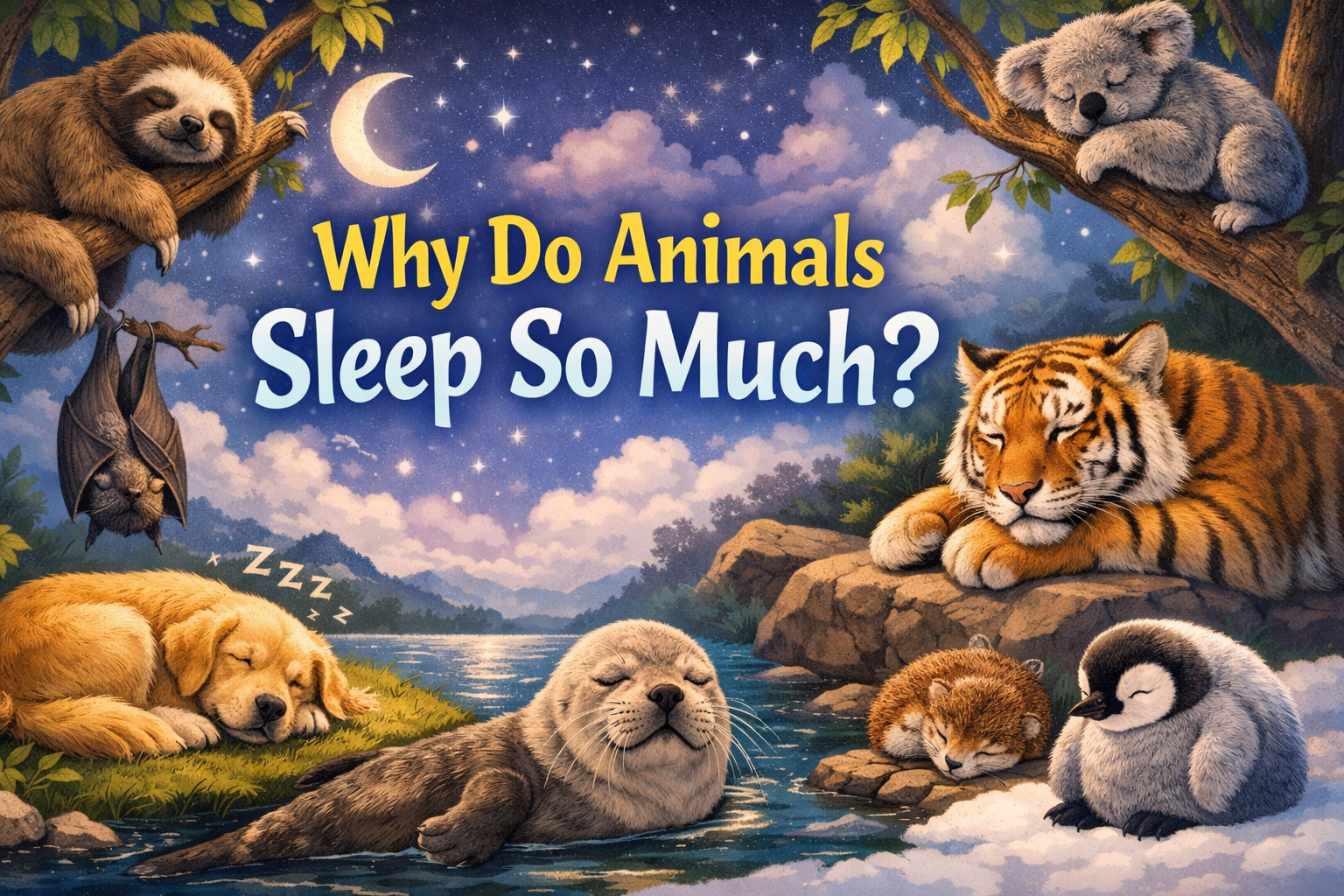
Why Do Animals Sleep So Much?
Animals often seem to sleep far more than humans, and that sparks a natural question: why do animals sleep so much? From cats that nap most of the day to koalas that snooze up to 20 hours, sleep plays a critical role in animal survival. In the first moments of life to old age, sleep supports growth, brain function, energy conservation, and protection from danger.
In this article, we’ll explore why animals sleep so much, how sleep patterns differ across species, and what science tells us about the benefits of long rest periods. Written in simple, engaging language, this guide is perfect for general readers, students, and animal lovers in the US and EU.
Introduction: Why Animal Sleep Is So Fascinating
Sleep is a universal behavior across the animal kingdom. Mammals, birds, reptiles, fish, and even insects show sleep-like states. Yet the amount of sleep animals need can vary dramatically—from just a few hours to nearly the entire day.
Understanding why animals sleep so much helps us learn how evolution shaped behavior to maximize survival. Sleep is not laziness; it is a powerful biological tool.
Scientific Classification
Because this topic applies to many species, animal sleep is best understood across major biological groups rather than a single animal.
| Group | Examples | Typical Sleep Pattern |
|---|---|---|
| Mammals | Cats, dogs, lions, humans | Long, deep sleep phases |
| Birds | Owls, parrots | Short sleep, sometimes one brain hemisphere at a time |
| Reptiles | Lizards, snakes | Light sleep with long rest periods |
| Fish | Sharks, zebrafish | Rest states without full eye closure |
| Insects | Bees, flies | Sleep-like inactivity cycles |
Despite differences, all groups show rest periods that serve similar biological purposes.
Habitat and Distribution
Animals live in diverse habitats—forests, oceans, deserts, grasslands, and urban areas. Sleep duration often depends on habitat conditions, including:
- Availability of food
- Presence of predators
- Temperature and climate
- Day–night cycles
For example:
- Predators like lions sleep longer because hunting requires intense bursts of energy.
- Prey animals such as deer sleep less and remain alert to avoid danger.
Habitat shapes how and when animals sleep.
Physical Characteristics Related to Sleep
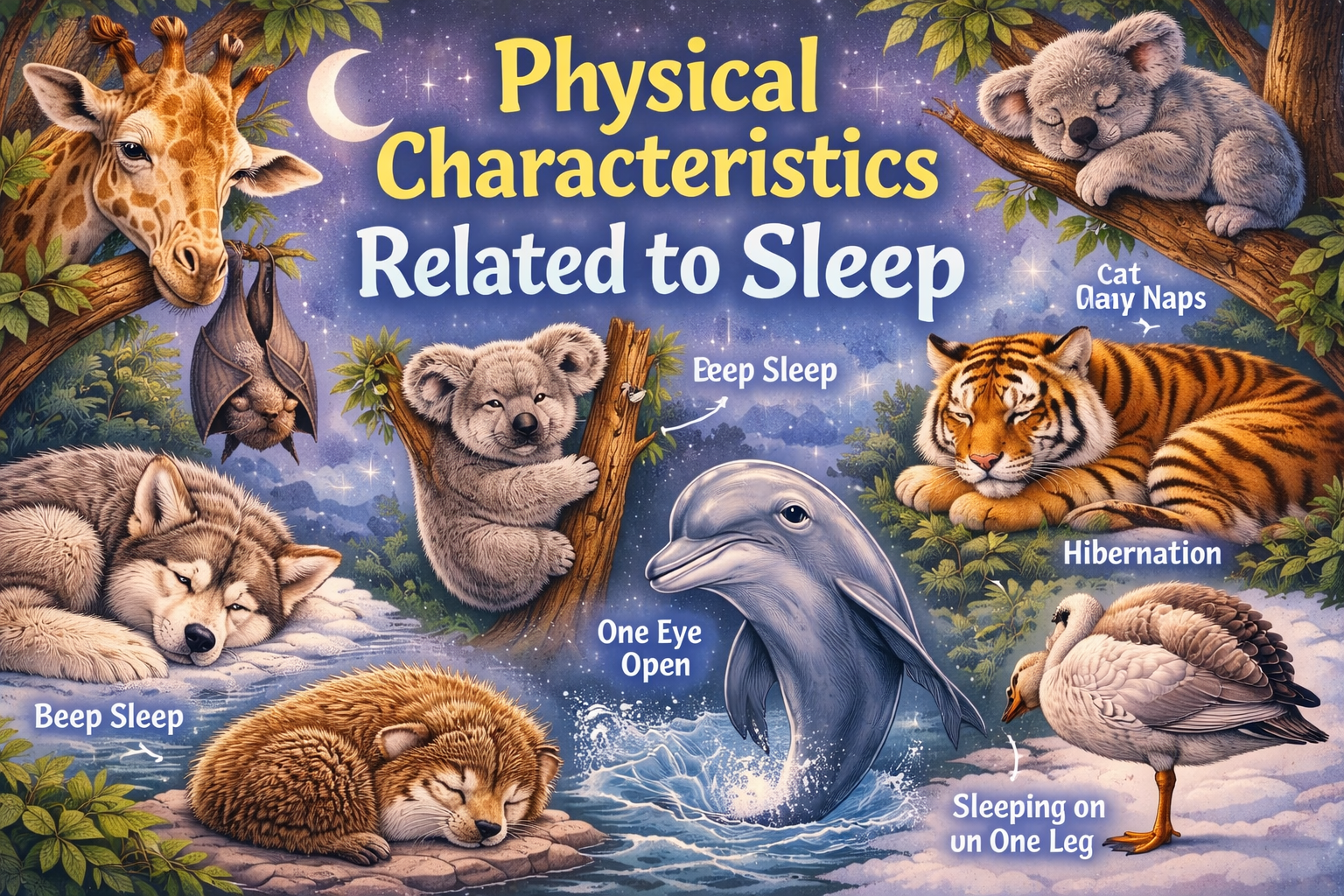
Physical traits influence sleep behavior more than you might expect.
Body Size and Sleep
- Smaller animals often have higher metabolisms and may need frequent rest.
- Larger animals may sleep less but rest more efficiently.
Brain Development
Animals with more complex brains (like mammals and birds) experience:
- REM sleep (linked to learning and memory)
- Non-REM sleep (linked to physical repair)
Energy Storage
Animals with limited fat reserves may sleep longer to conserve energy, especially during harsh seasons.
Diet and Feeding Habits
One major reason animals sleep so much is directly linked to what they eat.
Carnivores
- Meat is energy-rich.
- Hunting is exhausting.
- Long sleep helps recovery.
Examples:
- Lions: 16–20 hours/day
- Cats: 12–16 hours/day
Herbivores
- Plants are low in calories.
- Animals must eat often.
- Less time available for sleep.
Examples:
- Horses: 3–5 hours/day
- Elephants: 2–4 hours/day
Omnivores
- Mixed diets lead to moderate sleep needs.
Diet strongly influences sleep duration and patterns.
Behavior and Lifestyle
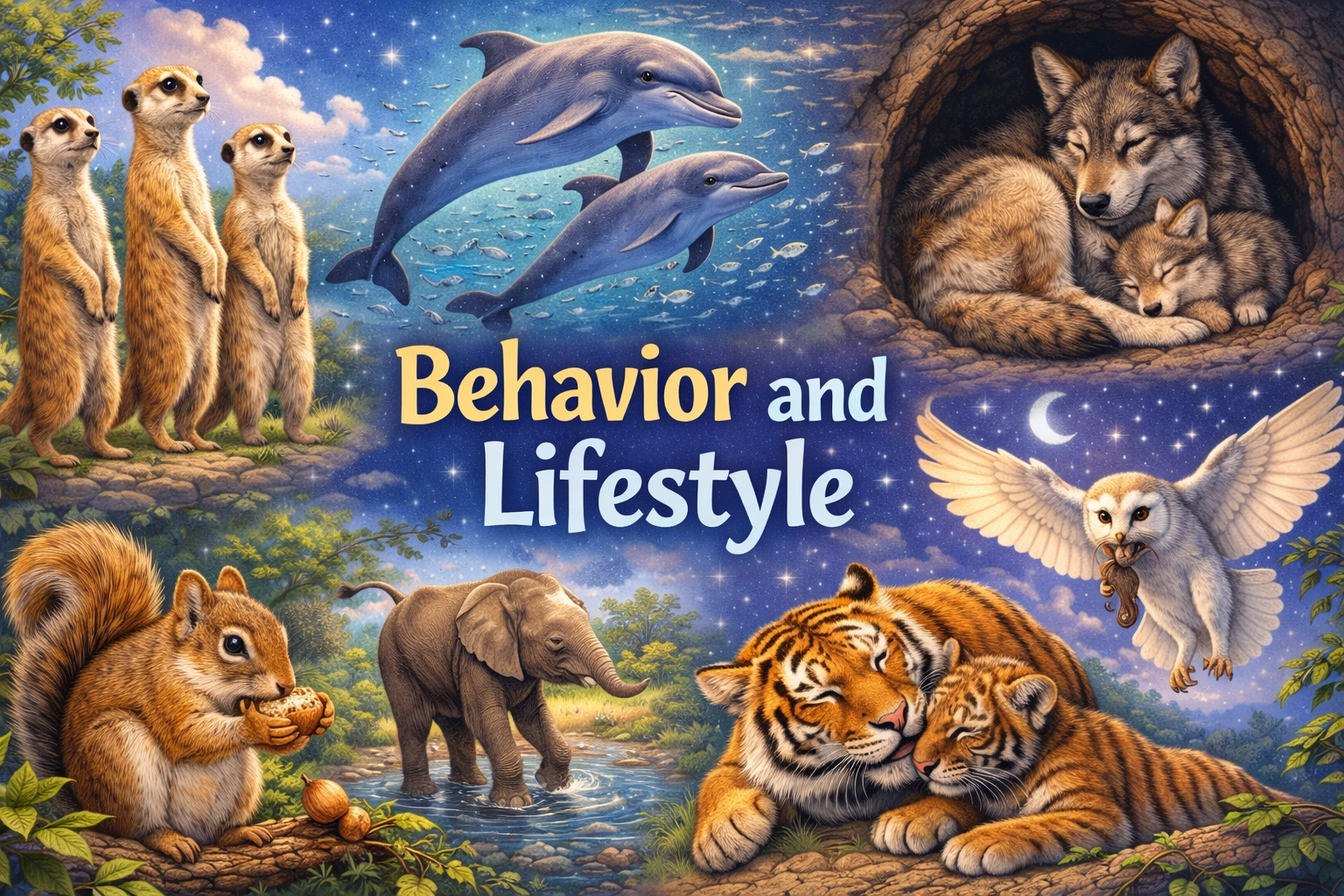
Why Do Animals Sleep So Much During the Day?
Some animals are:
- Nocturnal (active at night)
- Crepuscular (active at dawn and dusk)
Daytime sleep helps them:
- Avoid predators
- Escape heat
- Hunt when prey is active
Energy Conservation
Sleep lowers:
- Heart rate
- Body temperature
- Energy use
This is crucial for survival, especially when food is scarce.
Brain Maintenance
Sleep helps animals:
- Process information
- Learn survival skills
- Strengthen memory
Young animals sleep the most because their brains are still developing.
Reproduction and Lifespan
Sleep patterns change across life stages.
Young Animals
- Puppies, kittens, and babies sleep excessively.
- Sleep supports:
- Growth hormone release
- Brain wiring
- Immune system development
Adult Animals
- Sleep stabilizes behavior and reproduction.
- Well-rested animals:
- Hunt better
- Care for offspring more effectively
Aging Animals
Older animals may sleep more but experience lighter sleep.
Interesting Facts About Animal Sleep
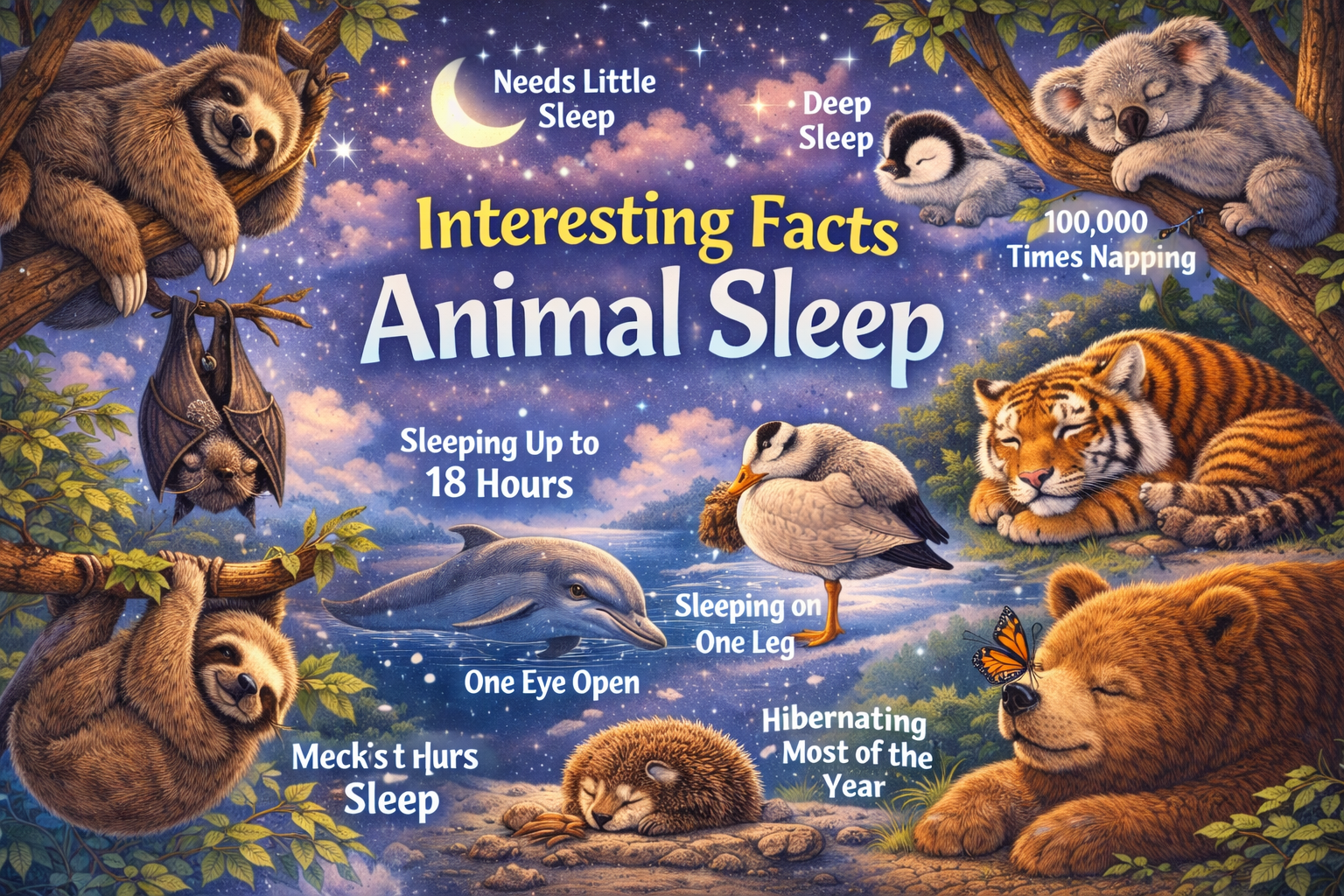
Here are some surprising facts that explain why animals sleep so much:
- Koalas sleep up to 20–22 hours per day due to low-energy diets.
- Dolphins sleep with half their brain awake to breathe.
- Giraffes may sleep less than 2 hours per day.
- Birds can sleep while flying short distances.
- Some frogs can sleep underground for months.
- Domestic cats sleep more than wild cats because food is guaranteed.
- Animals dream—REM sleep has been recorded in many mammals.
Conservation Status and Threats
Sleep is essential, but modern threats are disrupting natural sleep cycles.
Human Impact on Animal Sleep
- Artificial light pollution
- Noise from cities and traffic
- Habitat destruction
- Climate change altering day–night rhythms
Why This Matters
Disrupted sleep can lead to:
- Lower reproduction rates
- Weakened immune systems
- Reduced survival skills
Protecting habitats helps preserve natural sleep patterns, which are critical for animal health.
Frequently Asked Questions (FAQ)
1. Why do animals sleep more than humans?
Animals often have higher energy demands, different diets, and survival strategies that require longer recovery periods.
2. Which animal sleeps the most?
Koalas are among the top sleepers, resting up to 22 hours a day.
3. Do animals sleep like humans?
Many animals experience REM and non-REM sleep, but patterns vary widely by species.
4. Can animals survive without sleep?
No. Lack of sleep affects immune function, behavior, and survival, just like in humans.
5. Why do predators sleep more than prey?
Predators eat high-energy food and don’t need to stay alert constantly, allowing longer sleep periods.
Final Thoughts
So, why do animals sleep so much? Because sleep is one of nature’s smartest survival tools. From conserving energy to sharpening instincts, sleep keeps animals healthy and alive in a demanding world.
If you watch an animal sleeping peacefully, remember it’s not wasting time. It’s preparing for life.