
How to Take Care of a Cat for Beginners (Complete Guide)
Taking care of a cat for the first time can feel exciting—and a little overwhelming. If you’re new to pet ownership, learning how to take care of a cat for beginners is essential to ensure your furry friend stays healthy, happy, and safe.
Cats may look independent, but they rely on proper care, routine, and attention. This beginner-friendly guide will walk you through everything you need to know, step by step, using simple and practical advice trusted by pet owners in the US and EU.
Why Proper Cat Care Matters
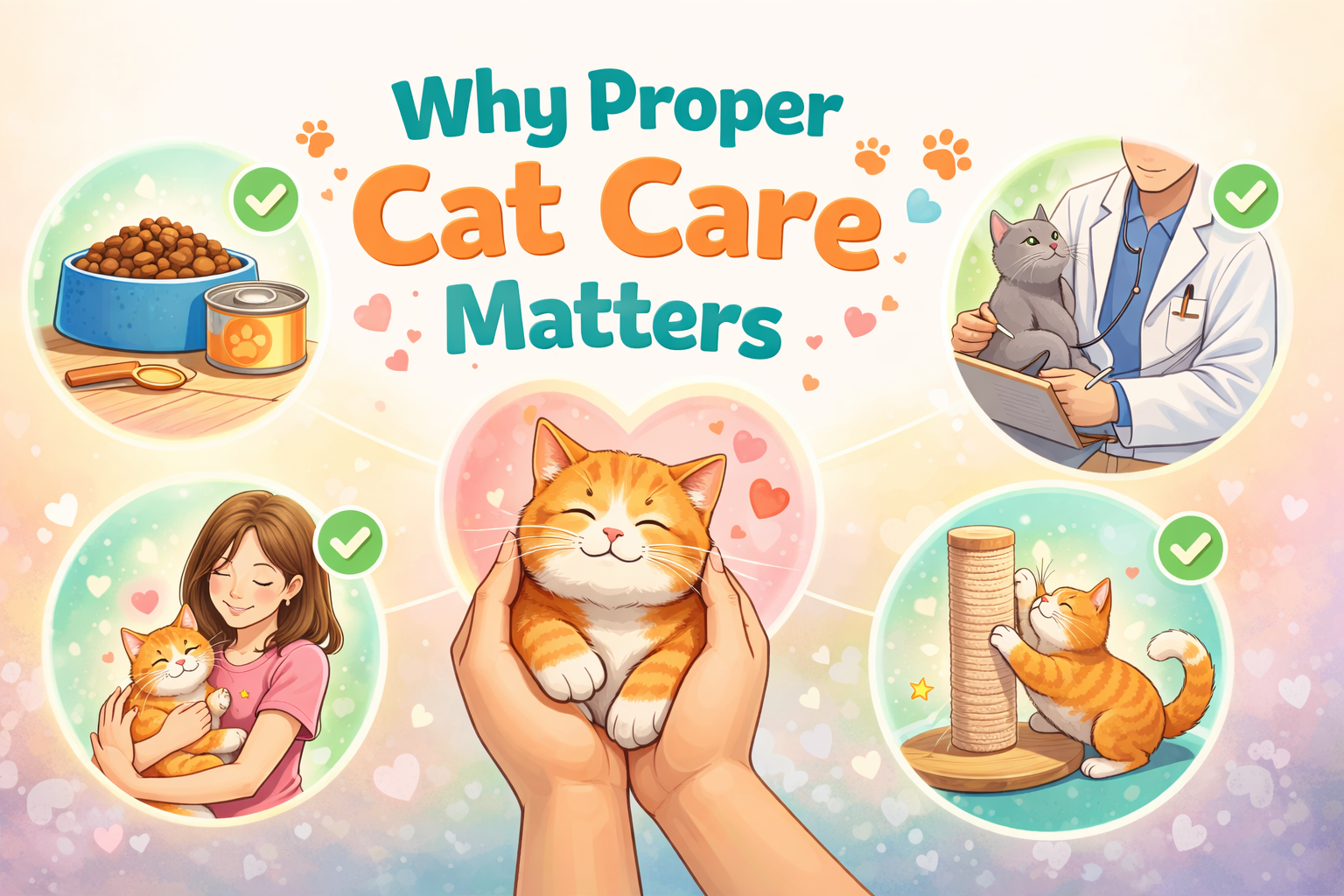
Proper cat care is not just about feeding and cuddling. It directly affects:
- Your cat’s physical health and lifespan
- Mental well-being and behavior
- Prevention of illnesses and costly vet visits
- A strong bond between you and your cat
Cats that receive good care tend to live 12–18 years or longer, while neglected care can lead to stress, illness, or behavioral problems.
Common Mistakes New Cat Owners Make
Many beginners unknowingly make mistakes that can harm their cats. Avoid these common issues:
- Feeding only dry food with no water access
- Skipping regular vet checkups
- Ignoring litter box hygiene
- Using human food or toxic plants
- Not providing mental stimulation
Understanding these mistakes early helps you become a responsible and confident cat owner.
Step-by-Step Guide: How to Take Care of a Cat for Beginners
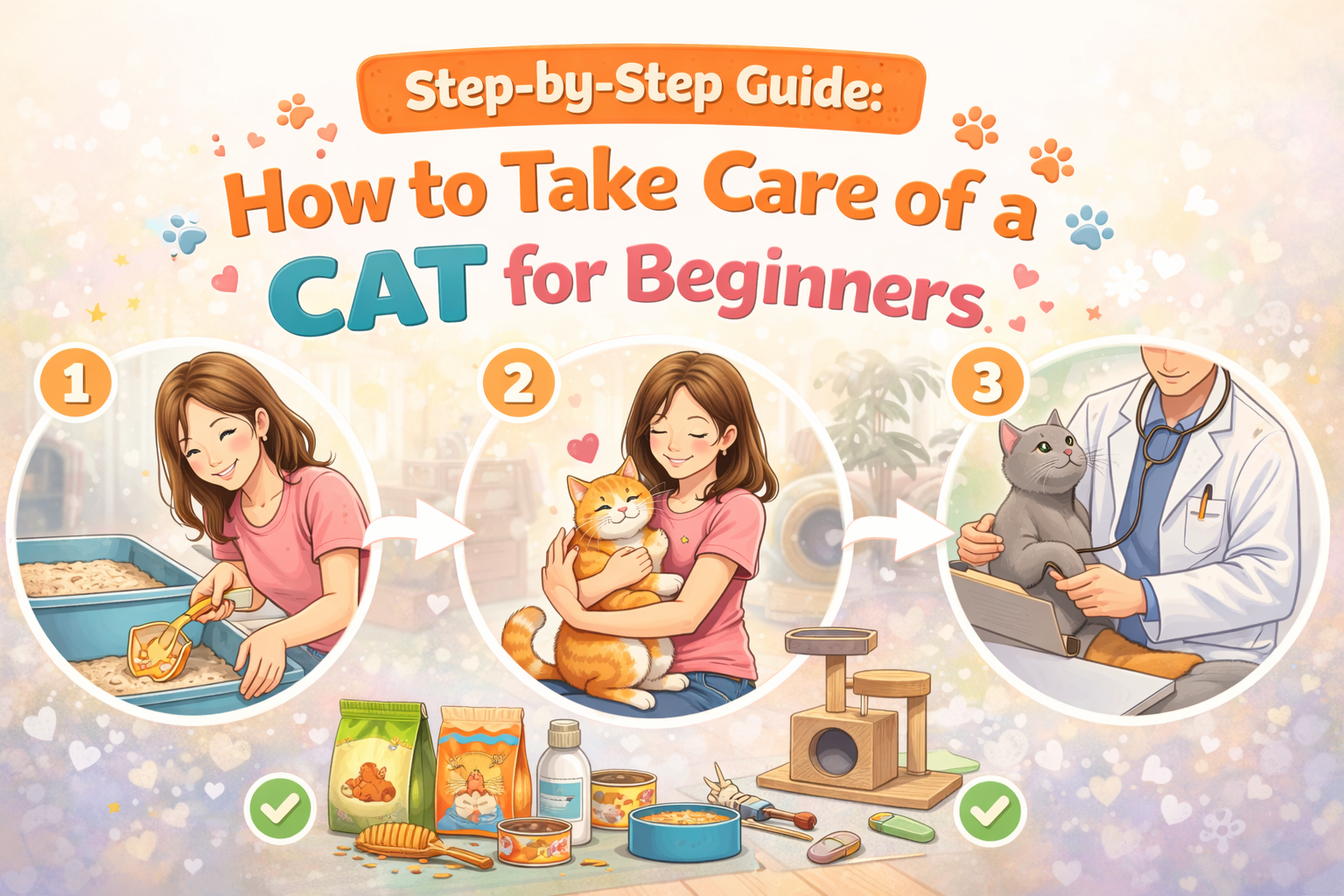
1. Prepare Your Home Before Bringing a Cat
Your home should be safe and comfortable.
Essential supplies you’ll need:
- Food and water bowls
- High-quality cat food
- Litter box and litter
- Scratching post
- Cat bed or quiet resting area
- Toys for mental stimulation
Keep electrical cords hidden and remove toxic plants like lilies.
2. Feeding Your Cat the Right Way
Nutrition is the foundation of good cat care.
Basic feeding tips:
- Feed cats 2–3 times per day
- Provide fresh, clean water daily
- Choose age-appropriate food (kitten, adult, senior)
Avoid feeding:
- Chocolate
- Onions or garlic
- Dairy products
- Raw fish
3. Litter Box Training & Hygiene
Most cats instinctively use a litter box, but cleanliness matters.
Best practices:
- Scoop waste daily
- Clean the box weekly
- Use unscented litter
- One litter box per cat + one extra
A dirty litter box may cause your cat to avoid it completely.
4. Grooming Basics for Beginners
Even short-haired cats need grooming.
Grooming routine includes:
- Brushing 1–3 times per week
- Nail trimming every 2–4 weeks
- Occasional baths (only if needed)
Regular grooming reduces shedding and prevents hairballs.
Daily, Weekly, and Monthly Cat Care Tips

Daily Cat Care Tasks
- Feed your cat on schedule
- Change drinking water
- Scoop the litter box
- Play and interact for at least 15 minutes
Weekly Cat Care Tasks
- Brush fur
- Clean food bowls
- Wash litter box
Monthly Cat Care Tasks
- Trim nails
- Check ears and teeth
- Inspect for fleas or skin issues
Consistency builds trust and keeps your cat stress-free.
Diet & Nutrition Tips for Healthy Cats
A balanced diet keeps your cat energetic and strong.
Key nutrition tips:
- Protein should be the main ingredient
- Mix wet and dry food if possible
- Avoid overfeeding to prevent obesity
Portion control matters:
- Adult cats need ~200–250 calories/day
- Adjust based on activity and age
Consult a vet before switching food brands.
Health, Hygiene & Safety Tips
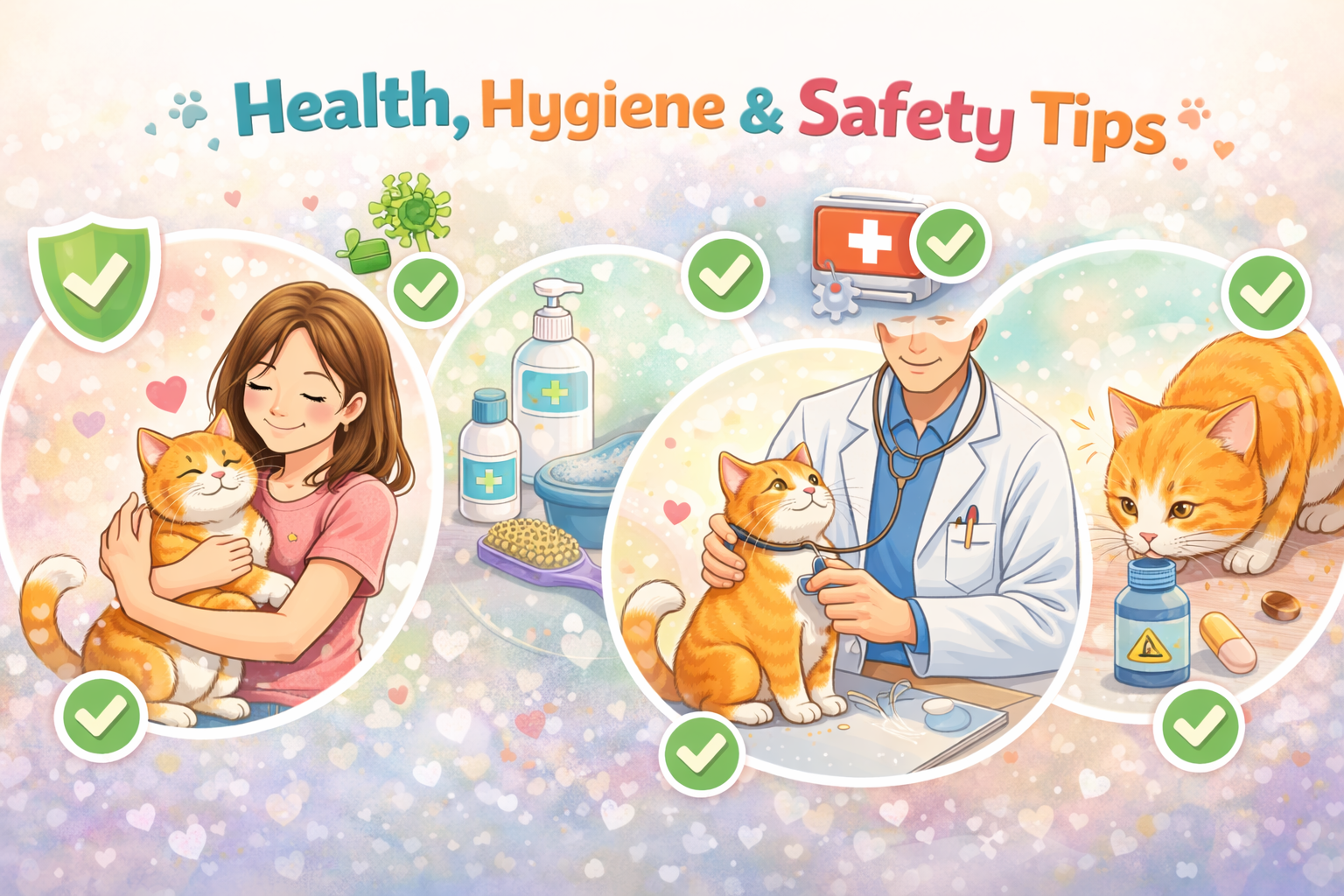
Keep Your Cat Healthy
- Schedule annual vet checkups
- Keep vaccinations up to date
- Use flea and parasite prevention
Home Safety Tips
- Keep windows secured
- Store cleaning products safely
- Use cat-safe toys only
Dental & Ear Care
- Brush teeth weekly (if trained early)
- Check ears for redness or odor
When Should You Visit a Vet?
Visit a veterinarian immediately if you notice:
- Loss of appetite for over 24 hours
- Vomiting or diarrhea
- Sudden weight loss
- Lethargy or hiding behavior
- Trouble breathing
Early treatment can save lives and reduce costs.
Frequently Asked Questions (FAQ)
1. How often should I feed my cat?
Most adult cats should eat 2 times a day, while kittens need 3–4 meals daily.
2. Is it okay to keep a cat indoors only?
Yes. Indoor cats often live longer and are safer from accidents and diseases.
3. How do beginners bond with a new cat?
Give your cat time, speak softly, offer treats, and play gently every day.
4. Do cats need baths?
Usually no. Cats groom themselves, but baths may be needed if very dirty.
5. What is the easiest cat breed for beginners?
Breeds like British Shorthair, Ragdoll, and American Shorthair are calm and beginner-friendly.
Conclusion: Be Patient and Consistent
Learning how to take care of a cat for beginners doesn’t require perfection—just patience, consistency, and love. Cats reward good care with affection, companionship, and years of joy.