
Dog Care Tips Every New Owner Should Know
Welcoming a dog into your life is exciting, emotional, and sometimes a little overwhelming. If you’re a new pet parent, learning the right dog care tips every new owner should know is essential for raising a healthy, happy, and well-behaved companion.
In the first few weeks, many owners struggle with feeding routines, training basics, health care, and understanding their dog’s behavior. Proper dog care isn’t just about love—it’s about consistency, knowledge, and responsible daily habits. This guide will walk you through everything you need to know, step by step, in a simple and practical way.
Why Proper Dog Care Matters
Dogs rely entirely on their owners for physical health, emotional stability, and safety. Good care directly affects their quality of life and lifespan.
When dogs receive proper care:
- They live longer and healthier lives
- Behavior problems are reduced
- Vet costs are lower over time
- The bond between dog and owner becomes stronger
Poor care, on the other hand, can lead to obesity, anxiety, aggression, frequent illness, and even shortened life expectancy.
For new owners in the US and EU, understanding responsible pet ownership is also important for meeting local animal welfare standards.
Common Mistakes New Dog Owners Make
Even loving owners make mistakes—especially in the beginning. Being aware of them helps you avoid future problems.
Most Common Dog Care Mistakes
- Overfeeding or feeding human food
- Skipping regular exercise
- Inconsistent training rules
- Ignoring early signs of illness
- Delaying vet visits or vaccinations
- Not socializing puppies early
These mistakes are common, but they’re also easy to fix with the right information and habits.
Step-by-Step Dog Care Guide for Beginners
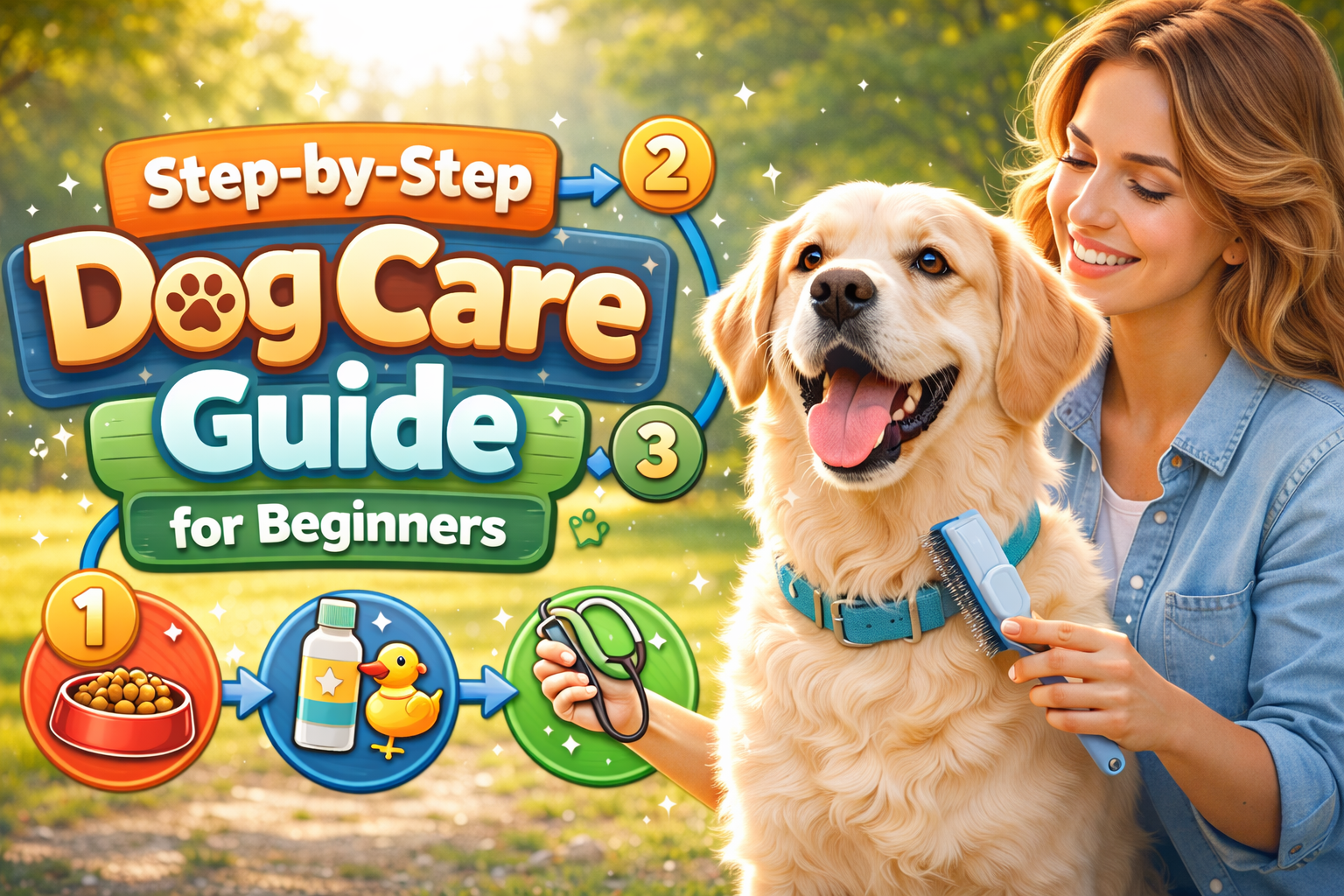
1. Prepare Your Home
Before bringing your dog home, make sure you have:
- Food and water bowls
- High-quality dog food
- Collar, leash, and ID tag
- Comfortable bed
- Safe toys for chewing
Remove small objects, toxic plants, and exposed wires to make your home dog-safe.
2. Create a Daily Routine
Dogs thrive on routine. Set fixed times for:
- Feeding
- Walks
- Playtime
- Training
- Bathroom breaks
A predictable schedule reduces anxiety and helps with house training.
3. Start Basic Training Early
Training should begin on day one. Focus on:
- Name recognition
- Sit, stay, and come commands
- Leash manners
- Positive reinforcement
Avoid punishment-based training—it causes fear and trust issues.
Daily, Weekly, and Monthly Dog Care Tips
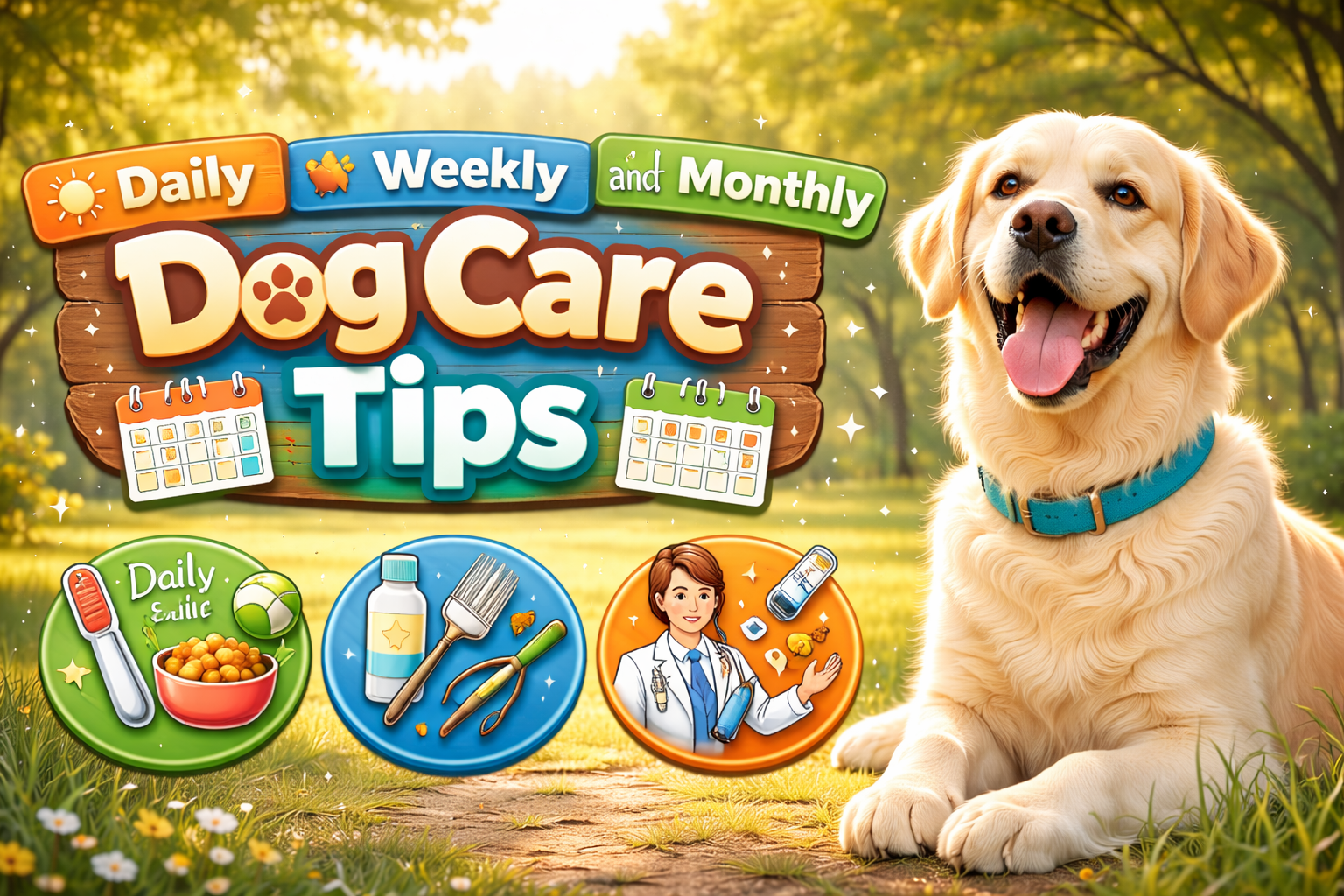
Daily Dog Care
- Provide fresh water at all times
- Feed balanced meals at consistent times
- Exercise at least 30–60 minutes
- Give mental stimulation through play
- Check eyes, ears, and paws briefly
Weekly Dog Care
- Brush coat (frequency depends on breed)
- Clean ears if needed
- Practice training commands
- Wash food and water bowls
Monthly Dog Care
- Trim nails
- Apply flea and tick prevention
- Check weight and body condition
- Inspect teeth and gums
Consistency is the secret to long-term dog health.
Diet & Nutrition Tips for Dogs
Proper nutrition is one of the most important dog care tips every new owner should know.
Choose the Right Dog Food
Look for food that:
- Lists real meat as the first ingredient
- Is appropriate for your dog’s age and size
- Meets AAFCO or EU pet food standards
Feeding Guidelines
- Puppies: 3–4 small meals per day
- Adult dogs: 2 meals per day
- Senior dogs: Adjust based on activity level
Foods to Avoid
Never feed dogs:
- Chocolate
- Grapes or raisins
- Onions and garlic
- Alcohol
- Xylitol (found in gum and sweets)
Always introduce new foods slowly to avoid stomach upset.
Health, Hygiene & Safety Tips
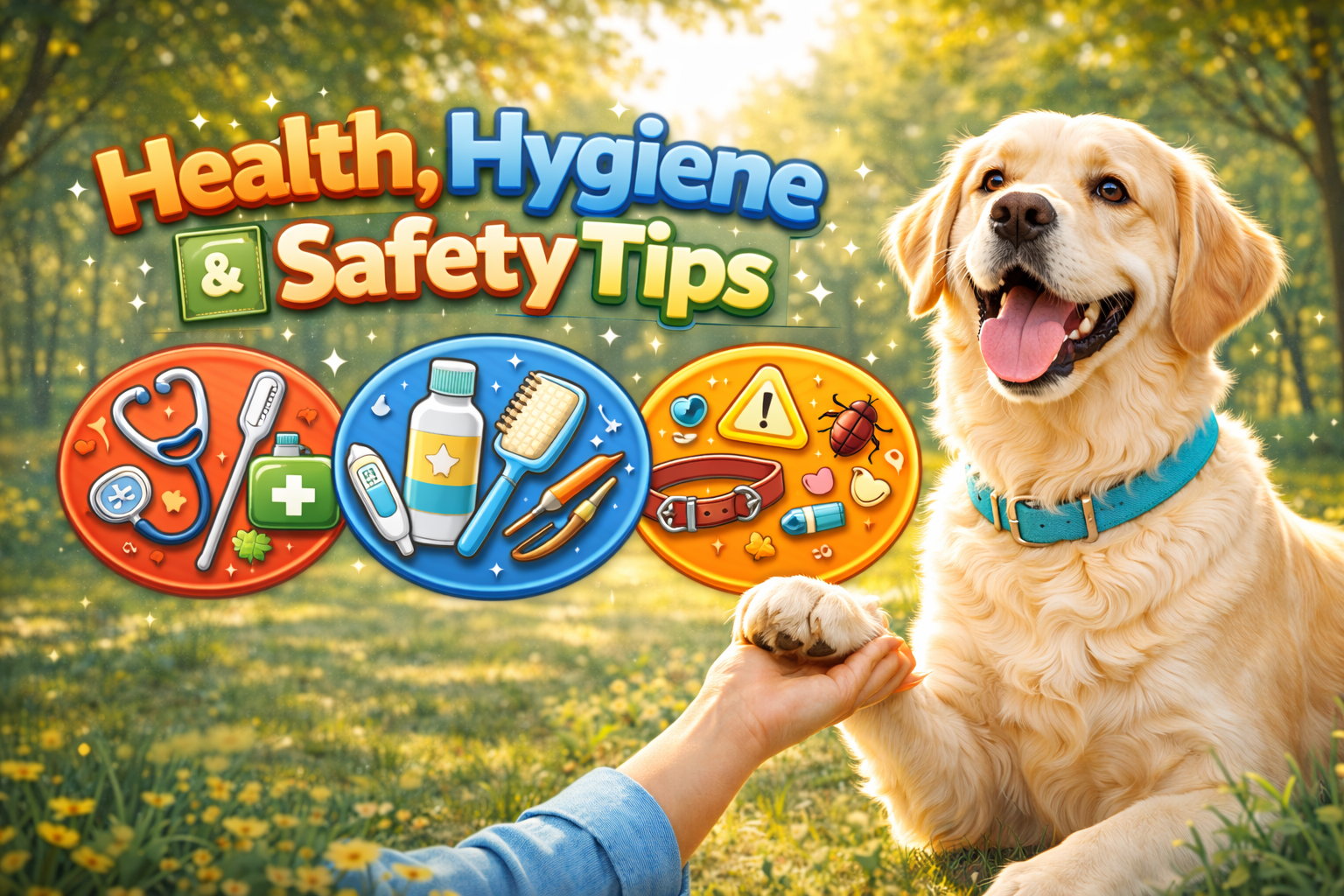
Grooming and Hygiene
Regular grooming helps prevent infections and skin problems.
- Brush teeth 2–3 times per week
- Bathe only when necessary
- Keep ears clean and dry
Exercise and Mental Health
Dogs need both physical and mental stimulation.
- Daily walks
- Puzzle toys
- Training games
- Social interaction
Bored dogs often develop destructive behaviors.
Home and Outdoor Safety
- Keep toxic products locked away
- Use a leash in public spaces
- Ensure fences are secure
- Avoid extreme heat or cold exposure
Safety is a core part of responsible dog care.
When to Visit a Vet
Regular vet visits are non-negotiable for healthy dogs.
Routine Vet Visits
- Puppies: Multiple visits for vaccines
- Adults: Once per year
- Seniors: Twice per year
Signs You Should See a Vet Immediately
- Loss of appetite for more than 24 hours
- Vomiting or diarrhea
- Lethargy or weakness
- Sudden behavior changes
- Limping or pain
Early treatment can save your dog’s life and reduce medical costs.
Frequently Asked Questions (FAQ)
1. What are the most important dog care tips for new owners?
The most important tips include proper nutrition, daily exercise, regular vet visits, consistent training, and a stable routine.
2. How often should I walk my dog?
Most dogs need at least one to two walks per day, depending on breed, age, and energy level.
3. What should I feed my dog daily?
Feed a balanced, high-quality dog food appropriate for your dog’s age, size, and activity level.
4. How do I know if my dog is healthy?
A healthy dog has good energy, a shiny coat, normal appetite, clear eyes, and regular bathroom habits.
5. When should a puppy visit the vet for the first time?
Puppies should see a vet within the first week of coming home for a health check and vaccination schedule.
Conclusion: A Helpful Reminder for New Dog Owners
Owning a dog is a long-term commitment, not just a lifestyle choice. By following these dog care tips every new owner should know, you’re setting the foundation for a loving, healthy, and happy life together.
Remember:
- Be patient—dogs learn over time
- Stay consistent with care and training
- Ask professionals when unsure
- Your dog depends on you every day
With proper care, your dog won’t just be a pet—they’ll become a true family member.