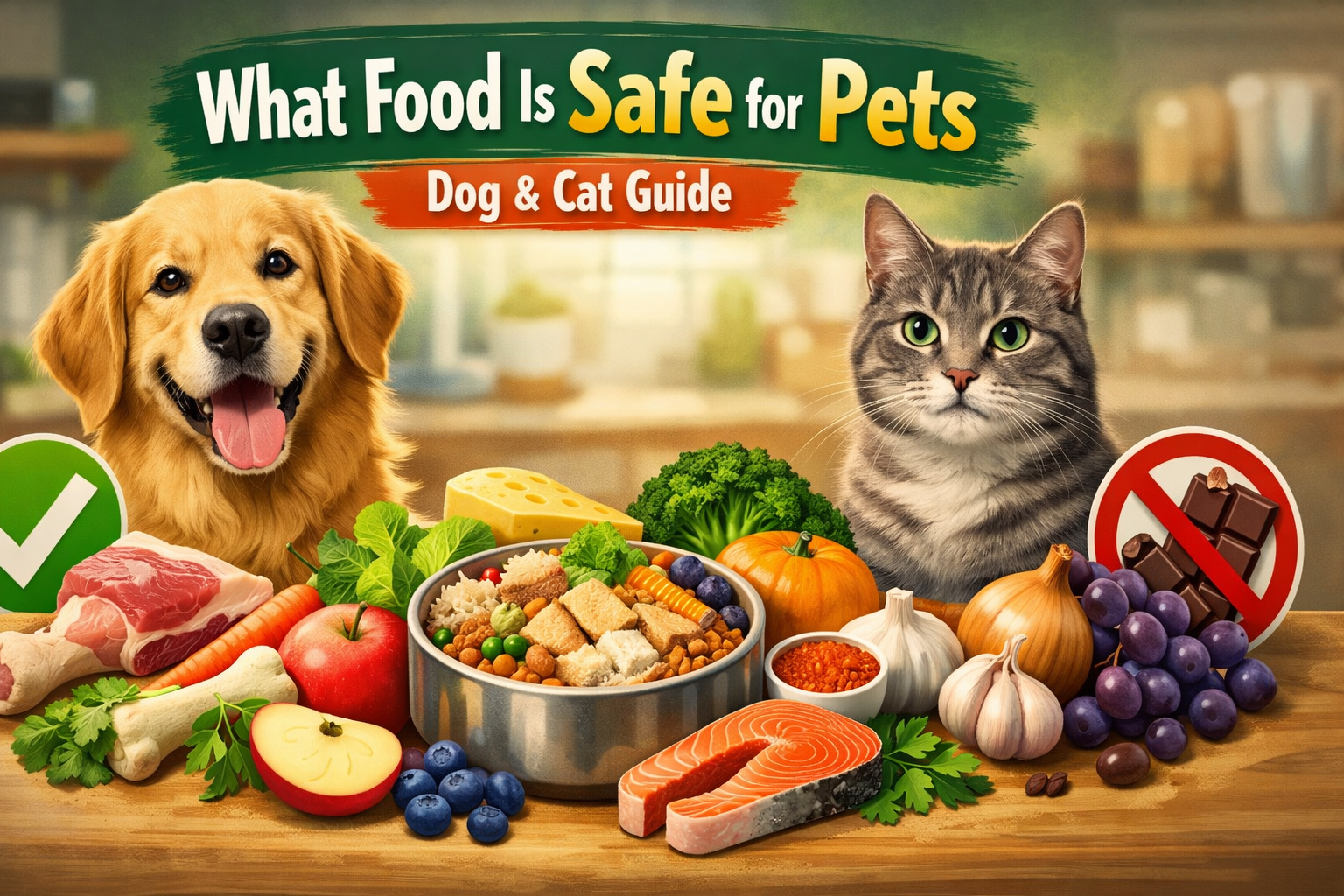
What Food Is Safe for Pets? (Dog & Cat Guide)
Feeding pets may look simple, but many dogs and cats get sick every year because they eat the wrong food. As a pet owner, knowing what food is safe for pets is one of the most important responsibilities you have.
Many human foods are harmless to us but dangerous or even toxic to dogs and cats. This guide will clearly explain safe foods, unsafe foods, feeding tips, and common mistakes, so you can confidently protect your furry family members.
Whether you’re a new pet parent or an experienced owner, this dog & cat food safety guide will help you make better daily choices.
Why Proper Food Care Matters for Pets
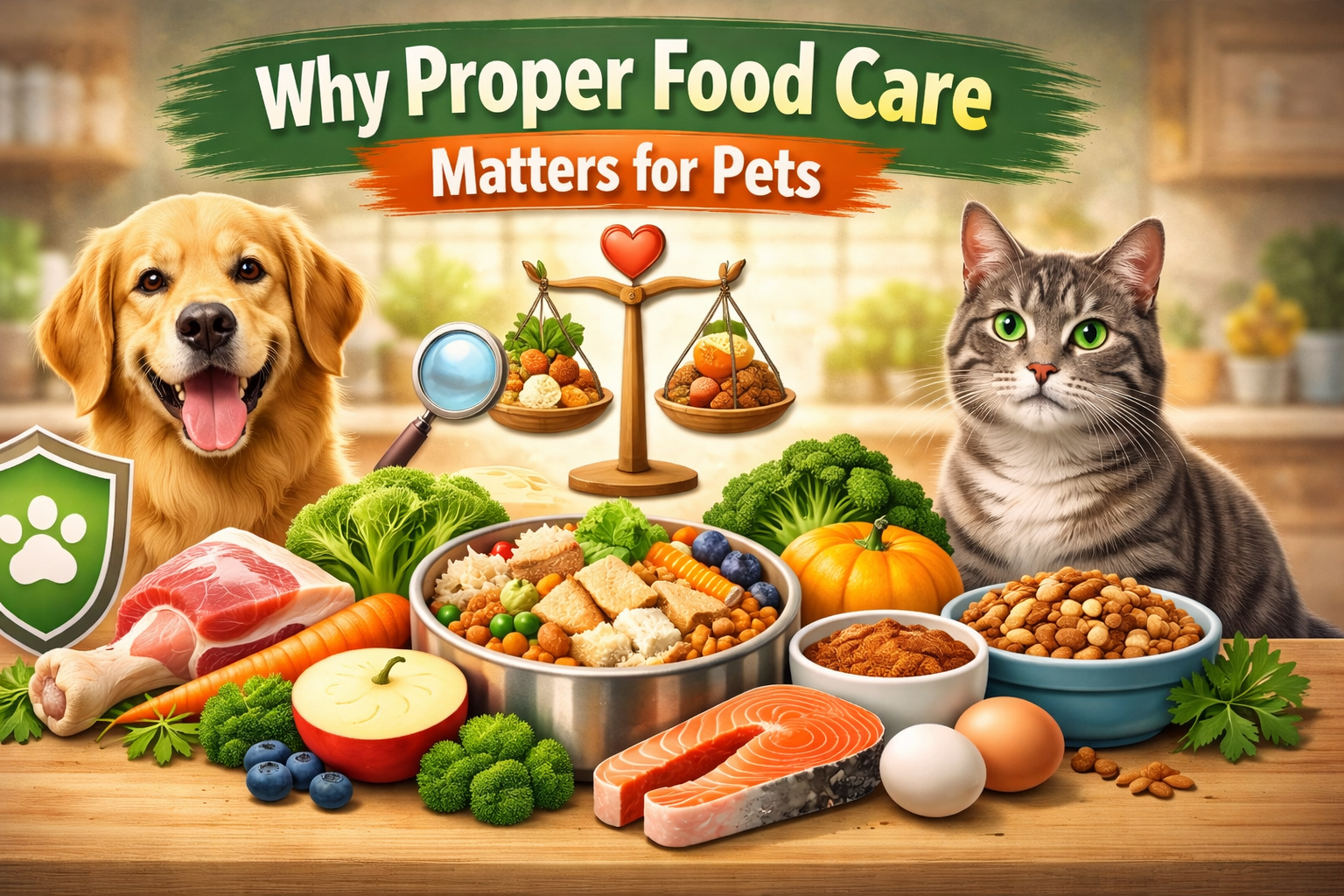
Food is not just fuel. It directly affects your pet’s:
- Immune system
- Digestion and gut health
- Skin, coat, and teeth
- Energy and behavior
- Lifespan and disease prevention
Dogs and cats have very different nutritional needs from humans and from each other. Feeding the wrong food regularly can lead to:
- Obesity
- Allergies
- Kidney or liver damage
- Pancreatitis
- Nutrient deficiencies
Knowing what food is safe for pets helps prevent long-term health problems and costly vet visits.
Common Mistakes Pet Owners Make
Many food-related pet problems come from good intentions but poor information.
Most common feeding mistakes
- Sharing table scraps daily
- Assuming “natural” foods are always safe
- Feeding dogs and cats the same food
- Giving treats too often
- Ignoring portion sizes
- Feeding cooked bones
Even small amounts of unsafe food can cause serious reactions, especially in cats.
What Food Is Safe for Pets? (Dog & Cat Guide – Core List)
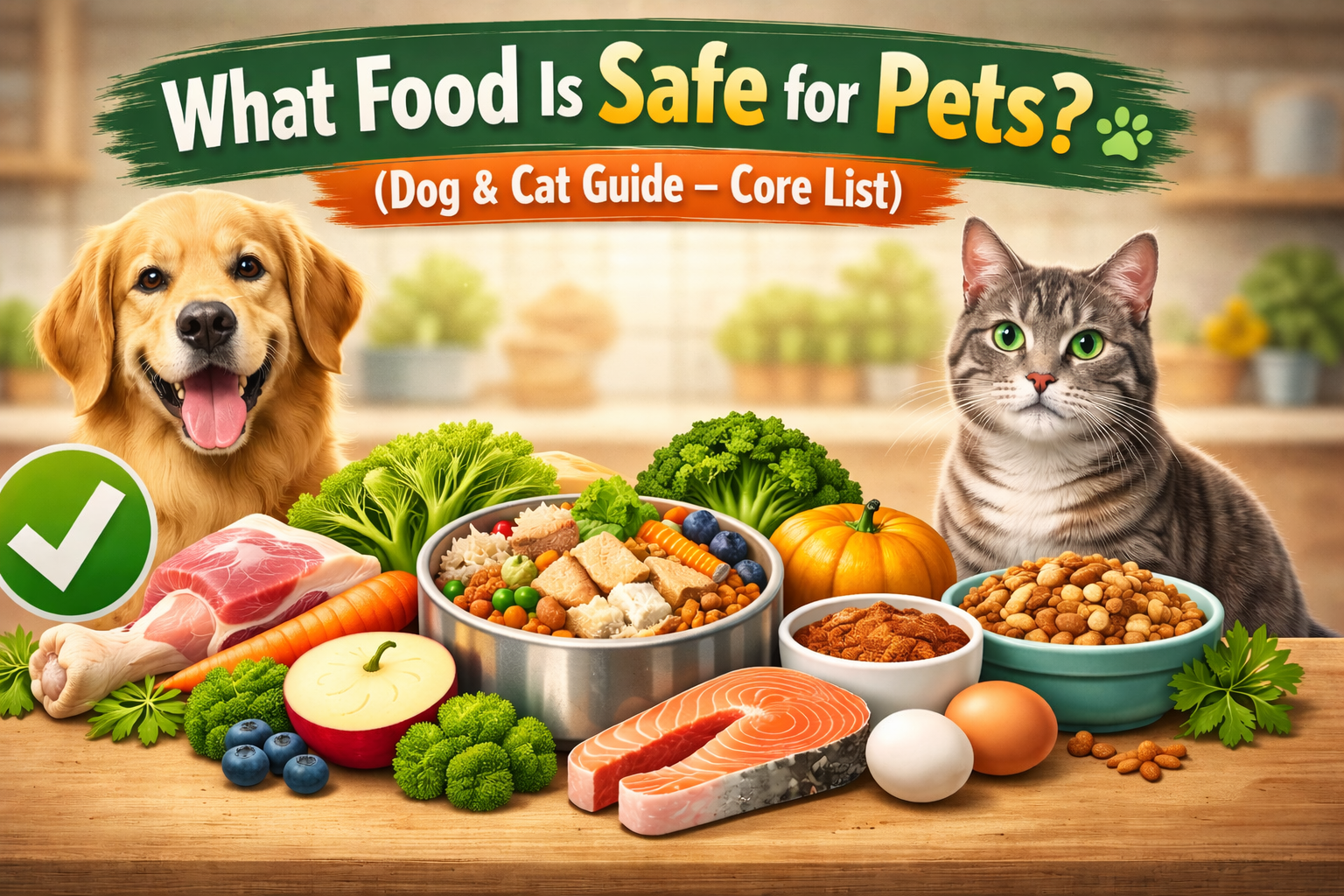
Safe Foods for Dogs
Dogs are omnivores, meaning they can eat a mix of animal and plant foods.
Safe foods for dogs include:
- Cooked chicken or turkey (no seasoning)
- Lean beef (boiled)
- Cooked eggs
- Plain rice or oatmeal
- Carrots
- Green beans
- Apples (no seeds)
- Blueberries
- Pumpkin (plain, cooked)
Always serve plain, cooked, and unseasoned food.
Safe Foods for Cats
Cats are obligate carnivores, meaning they must eat meat to survive.
Safe foods for cats include:
- Cooked chicken or turkey
- Cooked fish (salmon, tuna – small amounts)
- Cooked eggs
- Commercial wet or dry cat food
- Small amounts of pumpkin (digestive aid)
Cats should not eat many fruits or vegetables regularly.
Foods That Are NOT Safe for Pets
Toxic foods for both dogs and cats
- Chocolate
- Grapes and raisins
- Onions and garlic
- Alcohol
- Caffeine
- Xylitol (found in sugar-free gum)
- Raw dough
- Cooked bones
Especially dangerous for cats
- Milk and dairy
- Raw fish
- Dog food
- Fatty leftovers
If your pet eats any toxic food, contact a vet immediately.
Step-by-Step Safe Feeding Guide
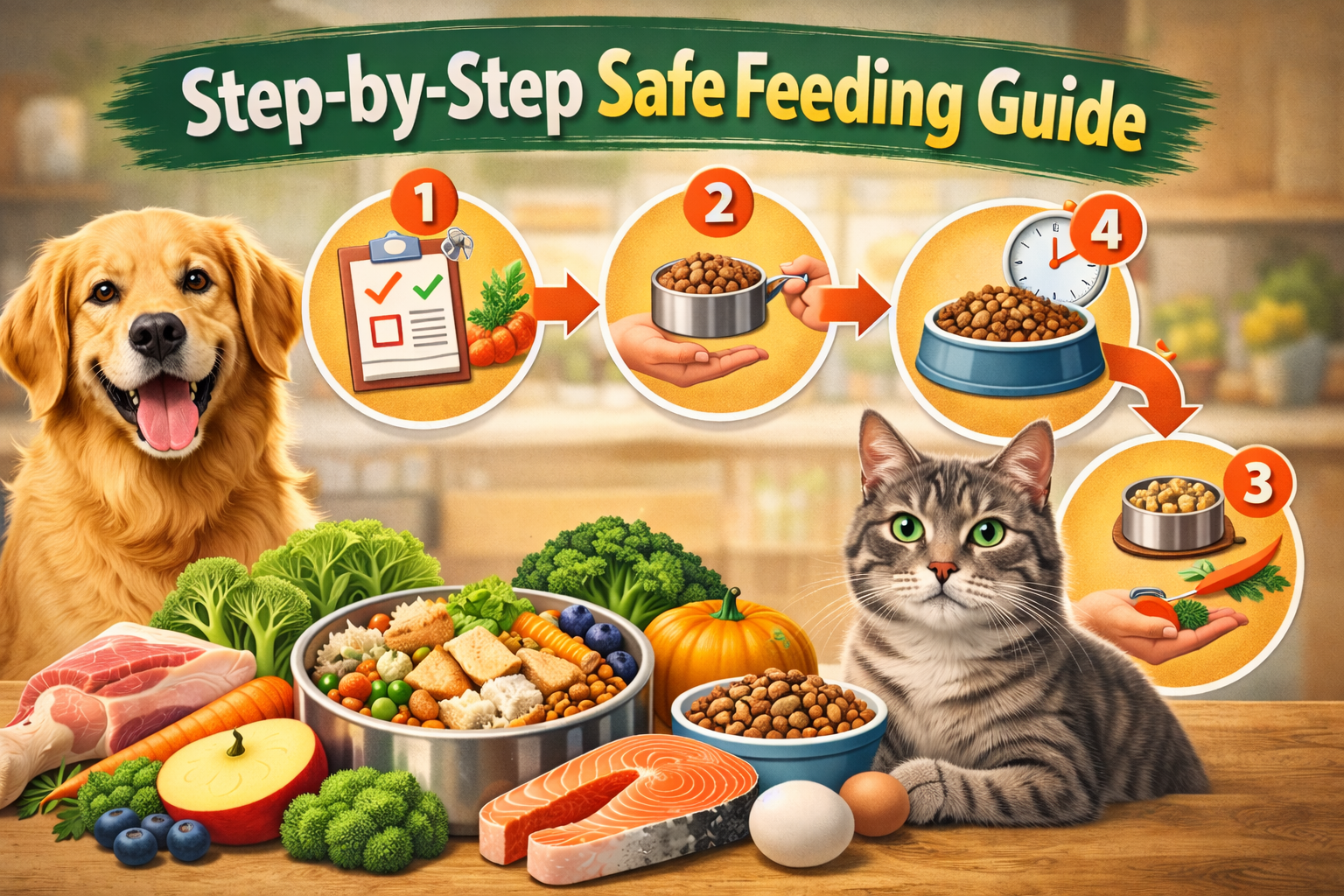
Step 1: Choose Species-Appropriate Food
- Dogs: Balanced dog food + safe human foods occasionally
- Cats: High-protein cat food only
Step 2: Read Labels Carefully
Look for:
- Named protein sources (chicken, salmon)
- No artificial colors
- AAFCO nutritional approval
Step 3: Introduce New Foods Slowly
- Mix new food with old food
- Increase over 5–7 days
- Watch for vomiting or diarrhea
Step 4: Control Portions
Overfeeding causes obesity and joint problems.
Daily, Weekly, and Monthly Care Tips
Daily
- Fresh water at all times
- Feed at the same time each day
- Remove uneaten food
Weekly
- Wash food and water bowls
- Check weight and appetite
- Limit treats
Monthly
- Monitor coat condition
- Check teeth and gums
- Review diet quality
Consistency is key for digestive health.
Diet & Nutrition Tips for Dogs and Cats
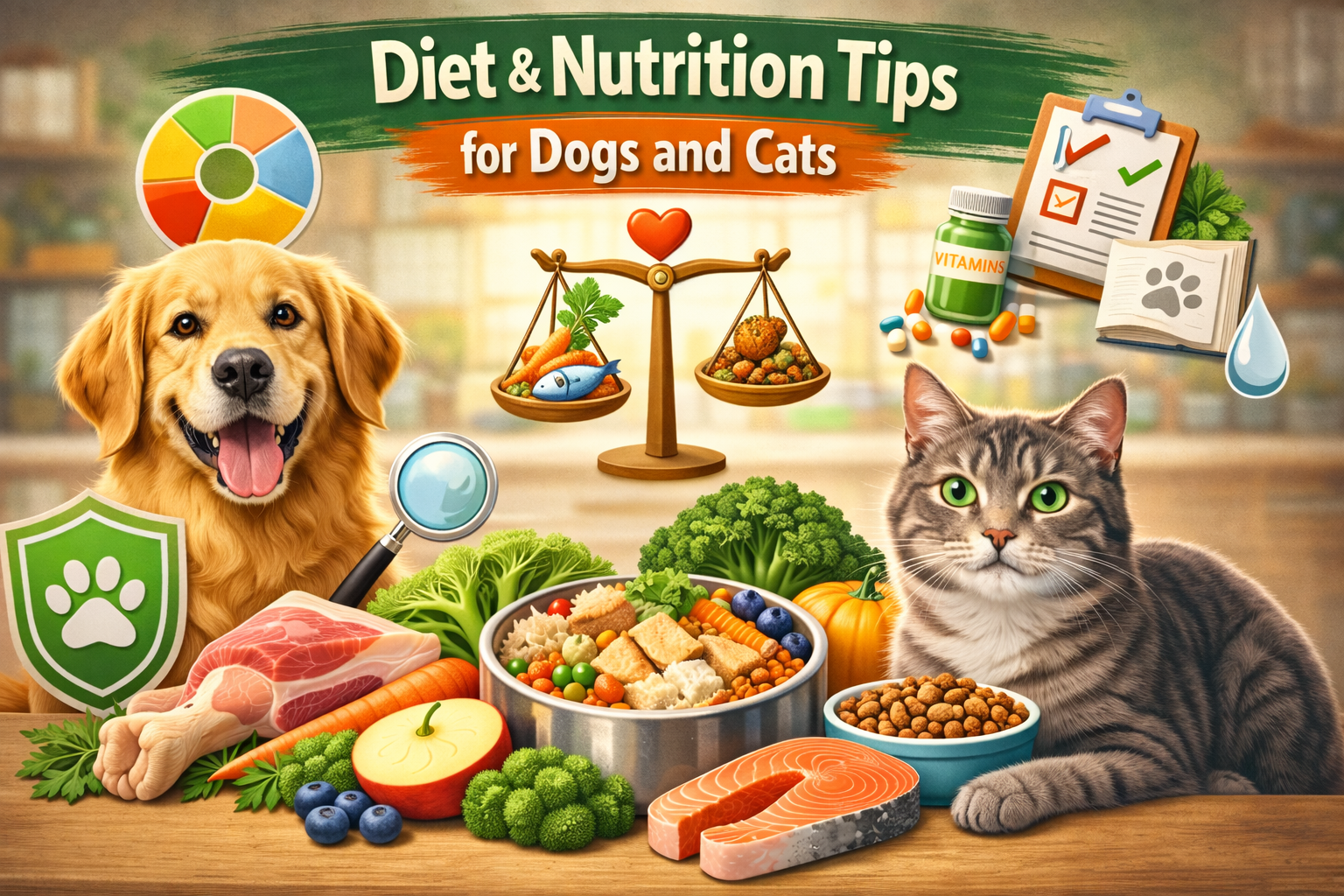
Protein is essential
- Dogs: Moderate to high protein
- Cats: Very high protein
Avoid fillers
- Corn, soy, and excessive grains may cause allergies
Treats should be limited
- Treats should be less than 10% of daily calories
Homemade diets?
Only follow vet-approved recipes. Random homemade meals often lack essential nutrients.
Health, Hygiene & Safety Tips
- Store pet food in airtight containers
- Never feed expired food
- Keep trash secured
- Avoid feeding from the table
- Clean bowls regularly
Good hygiene prevents bacteria like Salmonella and E. coli.
When to Visit a Vet
Schedule a vet visit if your pet shows:
- Sudden appetite loss
- Vomiting or diarrhea
- Weight changes
- Food allergies (itching, ear infections)
- Lethargy after eating
Also visit a vet before:
- Changing diet drastically
- Starting homemade food
- Feeding senior pets special diets
Frequently Asked Questions (FAQ)
1. What human food is safe for pets?
Plain cooked meat, rice, carrots, and pumpkin are safe in small amounts.
2. Can dogs and cats eat the same food?
No. Cats need nutrients like taurine that dog food lacks.
3. Is raw food safe for pets?
Raw diets carry bacterial risks. Always consult a vet first.
4. How often should pets eat?
- Dogs: 1–2 times per day
- Cats: 2–3 small meals
5. What food causes allergies in pets?
Common triggers include beef, dairy, chicken, and wheat.