
How Often Should You Bathe Your Dog? A Complete Pet Care Guide
Bathing your dog sounds simple—but how often should you bathe your dog without harming their skin or coat? Many pet owners bathe too often, while others don’t bathe enough. Both can lead to skin problems, bad odors, and discomfort for your furry friend.
In this complete Pets Care guide, you’ll learn how often to bathe your dog, what factors affect bathing frequency, common mistakes to avoid, and practical tips trusted by vets and professional groomers. This article is written for beginners to intermediate dog owners in the US & EU who want safe, simple, and reliable advice.
Why Proper Dog Bathing Care Matters
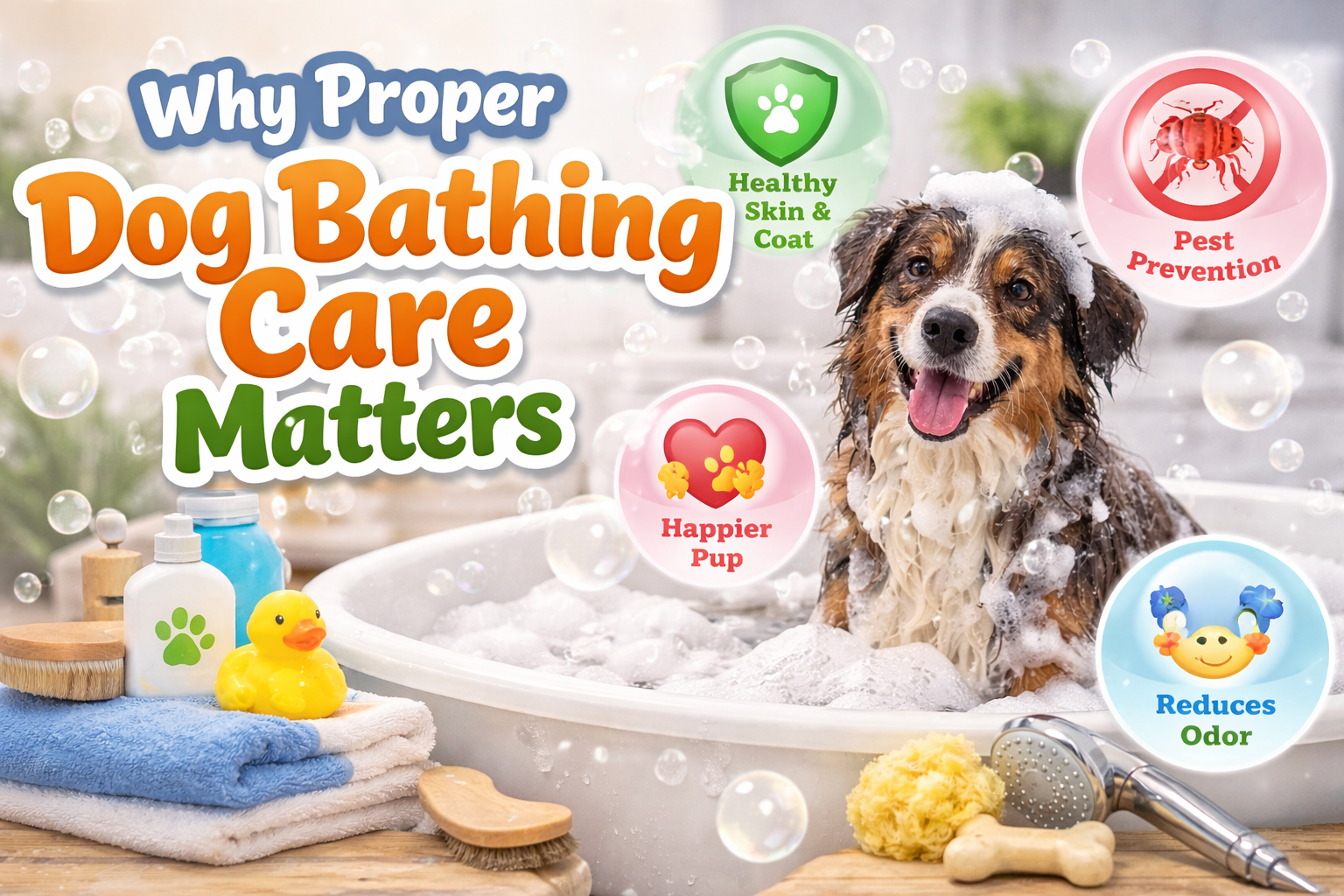
Bathing is more than making your dog smell good. Done correctly, it supports your dog’s overall health.
Proper bathing helps:
- Remove dirt, allergens, and bacteria
- Keep the skin balanced and hydrated
- Reduce shedding and matting
- Detect skin issues early (rashes, lumps, parasites)
However, over-bathing can strip natural oils, while under-bathing can cause odor, infections, and skin irritation. Finding the right balance is key.
How Often Should You Bathe Your Dog? (Quick Answer)
There’s no one-size-fits-all rule. In general:
- Most dogs: Every 4–6 weeks
- Dogs with oily coats: Every 2–4 weeks
- Dogs with dry or sensitive skin: Every 6–8 weeks
- Dogs with skin conditions: Follow your vet’s advice
The exact schedule depends on coat type, lifestyle, health, and environment.
Factors That Affect How Often You Should Bathe Your Dog

1. Coat Type
Different coats need different care.
Short-haired dogs
- Bathe every 6–8 weeks
- Brush weekly to remove loose hair
Medium to long-haired dogs
- Bathe every 4–6 weeks
- Regular brushing reduces the need for frequent baths
Curly or thick coats
- Bathe every 3–4 weeks
- Traps dirt and moisture more easily
2. Lifestyle & Activity Level
Your dog may need more frequent baths if they:
- Play outdoors daily
- Swim often
- Roll in dirt, mud, or grass
- Live on a farm or rural area
Indoor or low-activity dogs can go longer between baths.
3. Skin Sensitivity & Health Conditions
Dogs with:
- Allergies
- Hot spots
- Seborrhea
- Fungal or bacterial infections
…may need medicated baths on a vet-approved schedule.
Never increase bathing frequency without professional guidance.
4. Environment & Season
- Urban dogs: More pollution → slightly more frequent bathing
- Cold weather: Less bathing to avoid dry skin
- Hot summers: More frequent rinsing, but not always shampooing
Common Mistakes Pet Owners Make
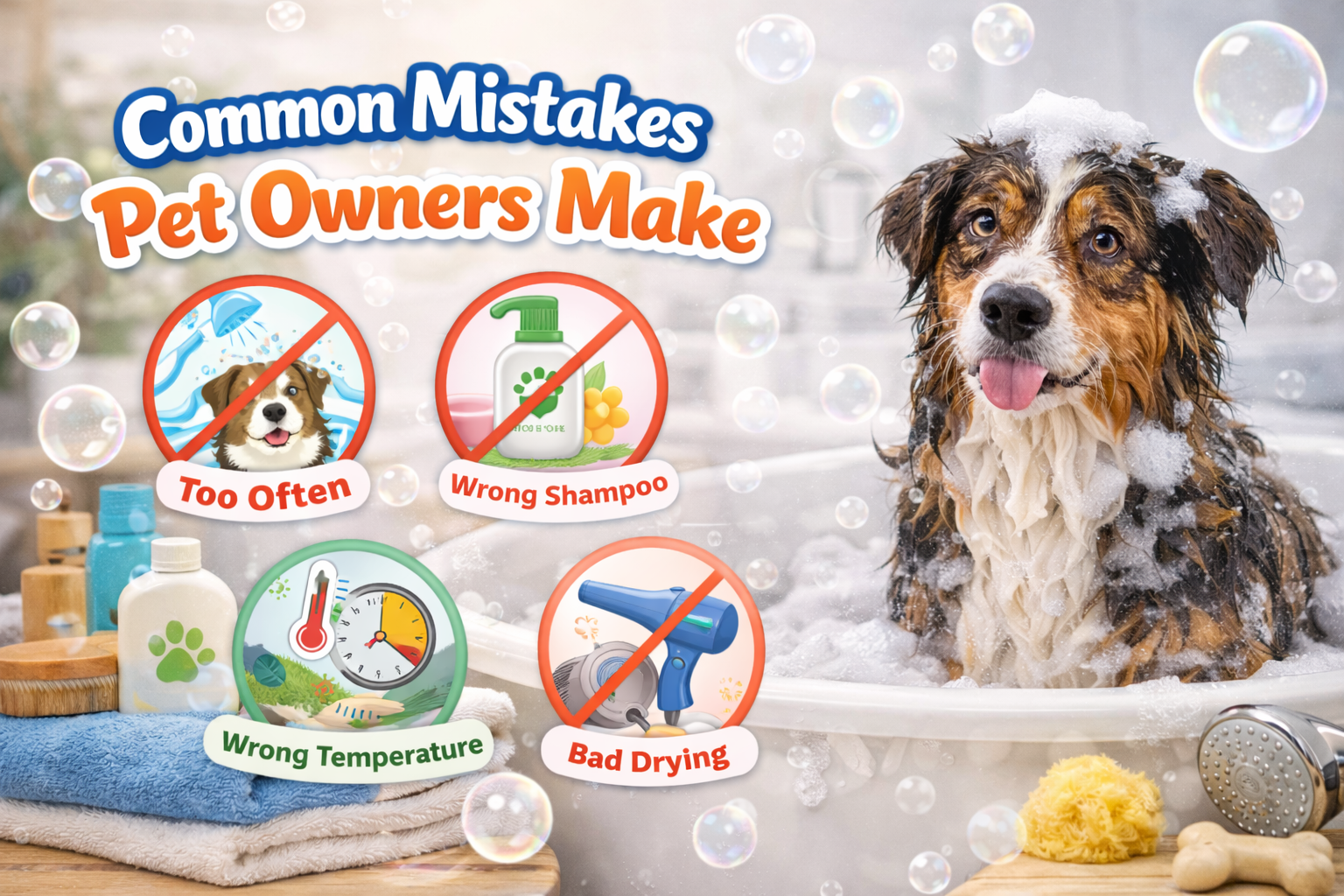
Avoid these frequent dog bathing errors:
- Bathing too often “just because”
- Using human shampoo (harsh pH)
- Skipping brushing before bathing
- Not rinsing shampoo thoroughly
- Bathing sick or stressed dogs unnecessarily
These mistakes can cause itching, dandruff, and coat damage.
Step-by-Step Care Guide: How to Bathe Your Dog Properly
Step 1: Brush Before the Bath
- Removes loose hair and tangles
- Prevents matting after water exposure
Step 2: Use Lukewarm Water
- Too hot or cold can shock your dog
- Start from the neck and work downward
Step 3: Choose the Right Dog Shampoo
Look for:
- pH-balanced dog shampoo
- Hypoallergenic formulas for sensitive skin
- Vet-approved medicated shampoo if needed
Step 4: Massage Gently
- Avoid eyes, ears, and nose
- Let shampoo sit for 2–5 minutes (if recommended)
Step 5: Rinse Thoroughly
- Leftover shampoo causes itching
- Rinse until water runs clear
Step 6: Dry Completely
- Use a towel or low-heat dryer
- Moisture can cause fungal infections
Daily, Weekly, and Monthly Dog Care Tips
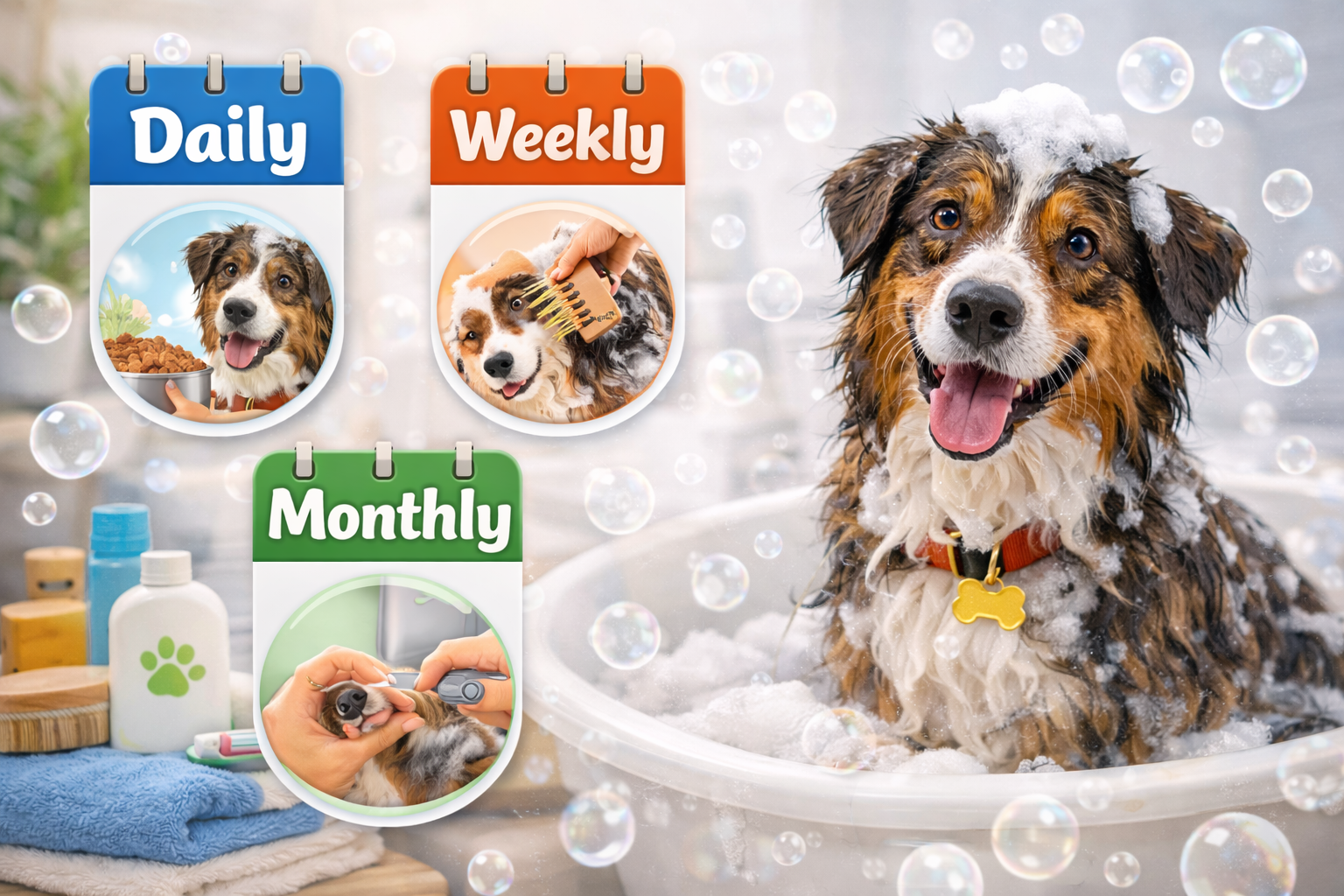
Daily Care
- Wipe paws after walks
- Check ears and eyes
- Brush teeth or use dental chews
Weekly Care
- Brush coat 2–3 times
- Check for ticks, fleas, or redness
- Clean ears if needed
Monthly Care
- Bathe based on coat type
- Trim nails
- Inspect skin closely
Consistent routine reduces the need for frequent baths.
Diet & Nutrition Tips for Healthy Skin and Coat
A shiny coat starts from the inside.
Feed your dog:
- High-quality protein
- Omega-3 & Omega-6 fatty acids
- Vitamins A, E, and Zinc
Foods that support coat health:
- Salmon-based dog food
- Fish oil supplements (vet-approved)
- Eggs and flaxseed
Poor nutrition can cause excessive odor and oily skin—leading owners to bathe too often.
Health, Hygiene & Safety Tips

- Always use dog-specific grooming products
- Clean ears after swimming or bathing
- Avoid water entering ear canals
- Never bathe puppies under 8 weeks old
- Monitor skin after each bath
If you notice:
- Excessive scratching
- Hair loss
- Strong odor returning quickly
…it’s a sign something else may be wrong.
When to Visit a Vet
Consult a veterinarian if your dog has:
- Persistent itching or redness
- Sores, scabs, or bald patches
- Greasy or foul-smelling coat
- Skin infections that don’t improve
These issues often require medical treatment—not more baths.
Frequently Asked Questions (FAQ)
1. How often should you bathe your dog indoors?
Indoor dogs usually need a bath every 6–8 weeks, depending on coat type and hygiene habits.
2. Can I bathe my dog once a week?
Weekly bathing is not recommended unless advised by a vet. It can dry out the skin.
3. Is it okay to rinse my dog without shampoo?
Yes. Rinsing with water after muddy walks is safe and does not strip oils.
4. How often should puppies be bathed?
Puppies should be bathed only when necessary, usually every 2–3 months after 8 weeks old.
5. What happens if I don’t bathe my dog?
Dirt buildup, odor, skin infections, and matting may occur—especially in long-haired breeds.
Conclusion: Finding the Right Bathing Balance
So, how often should you bathe your dog? For most dogs, every 4–6 weeks is ideal—but the right answer depends on your dog’s coat, health, and lifestyle.
Helpful reminder:
Brush more, bathe less. Regular grooming reduces odors naturally and keeps your dog healthier and happier.