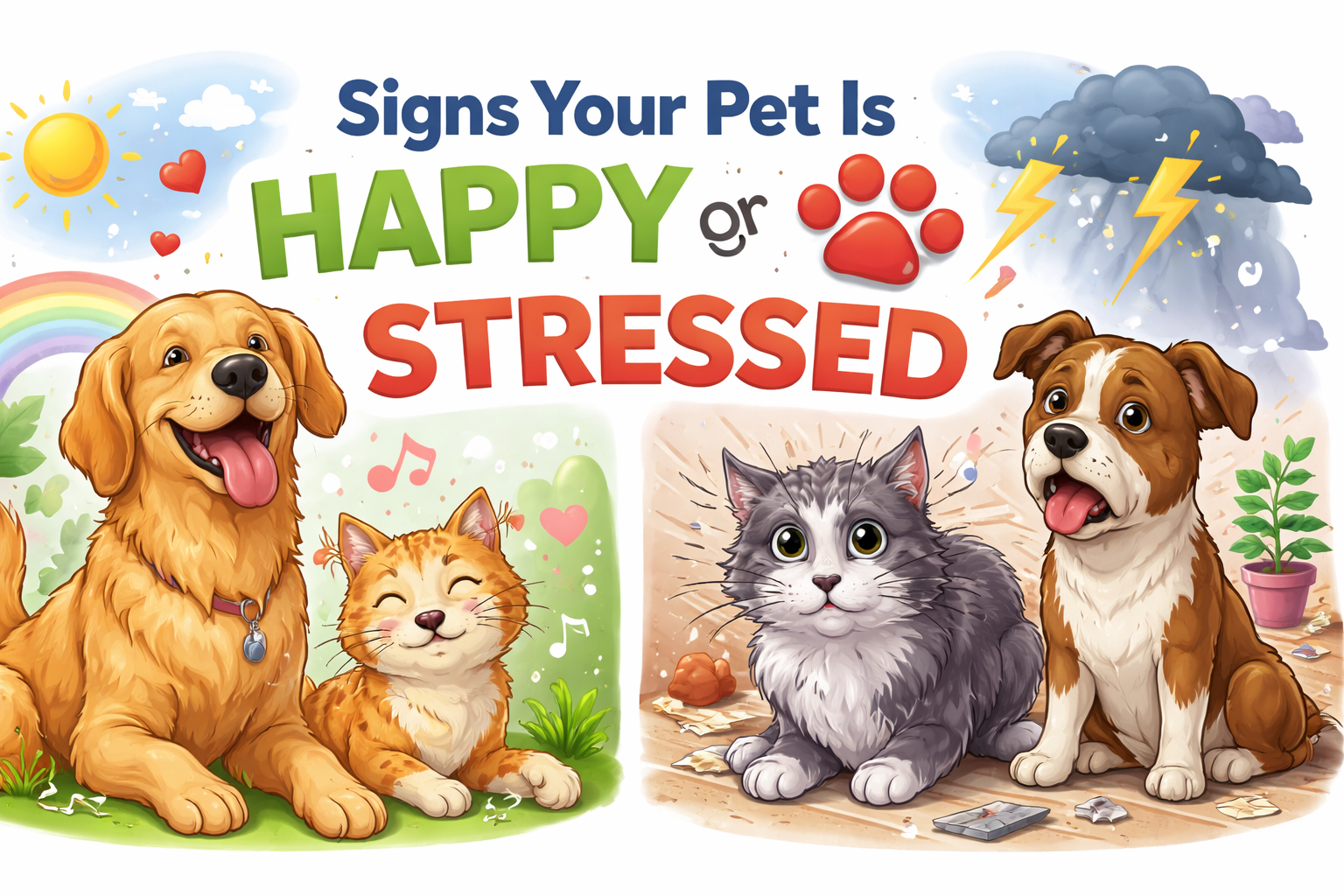
Signs Your Pet Is Happy or Stressed
Introduction: Why Understanding Pet Emotions Matters
Recognizing the signs your pet is happy or stressed is one of the most important skills for any pet owner. Animals can’t explain how they feel in words, so they rely on body language, behavior, and subtle signals to communicate their emotional state.
In the first moments you spend with your pet each day, their posture, movements, and reactions already tell a story. Learning to read these signals helps you improve animal welfare, prevent behavior problems, and strengthen the bond between humans and animals.
Whether you care for a dog, cat, small pet, or even observe wildlife, understanding emotional signals is essential to responsible animal behavior awareness.
What Is This Behavior? (Simple Explanation)
Animal behavior related to happiness or stress refers to observable physical and behavioral signals that show how an animal is feeling emotionally.
- Happy animals show relaxed, confident, and curious behaviors
- Stressed animals display fear, anxiety, avoidance, or defensive actions
These signals are part of animal survival and communication systems that evolved long before domestication.
Why Animals Show These Behaviors
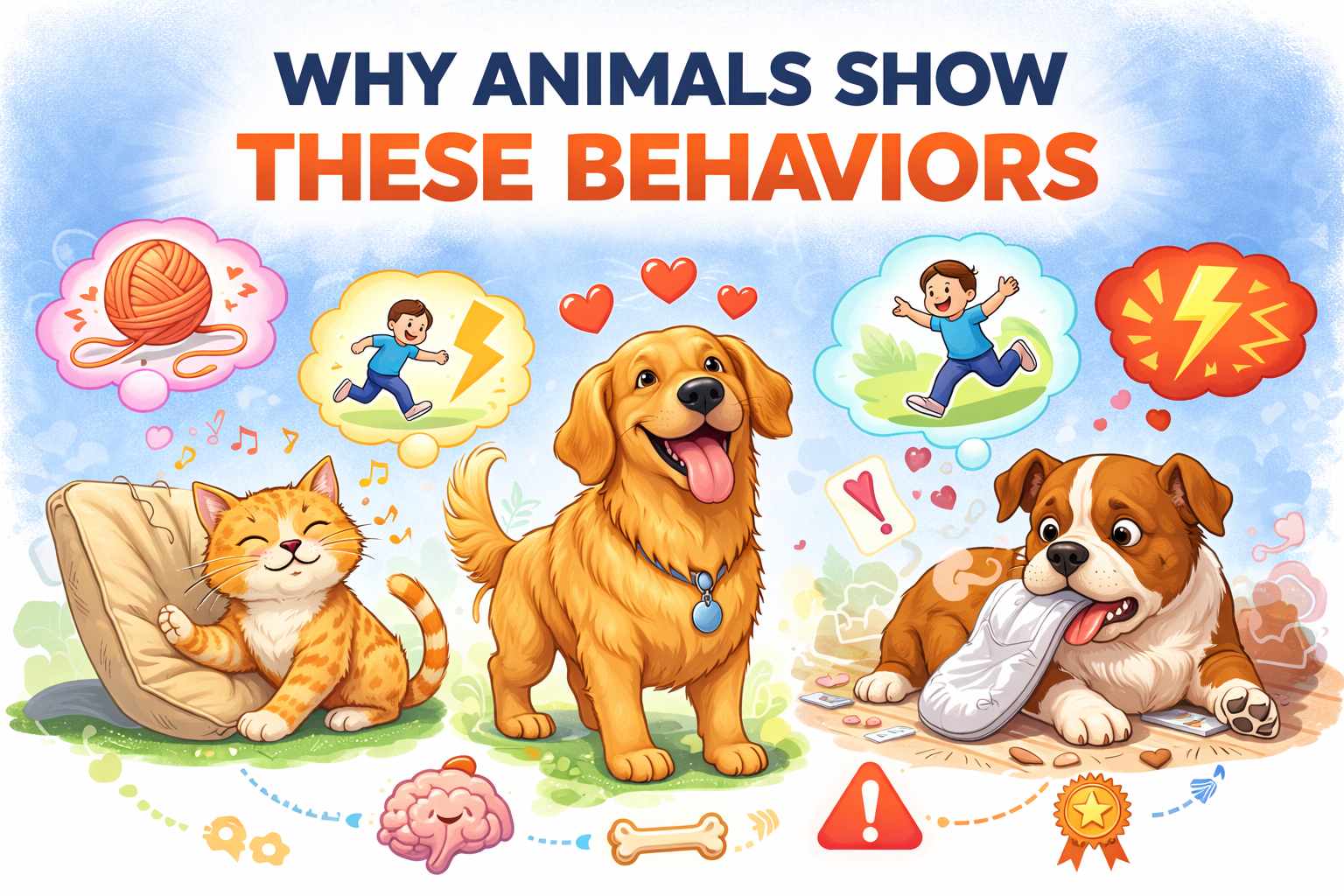
Animals express happiness and stress for important biological reasons:
Emotional Communication
- Signals help animals communicate with humans or other animals
- Body language prevents conflict and misunderstanding
Survival Instincts
- Stress behaviors prepare animals for danger
- Calm behaviors signal safety and social bonding
Environmental Feedback
- Animals react emotionally to noise, space, routines, and human interaction
Understanding these reactions helps humans create safer, more supportive environments.
Common Triggers and Causes
Many factors influence whether a pet feels calm or stressed.
Triggers That Create Happiness
- Consistent routines
- Gentle physical contact
- Mental stimulation and play
- Proper nutrition and health
- Safe, familiar environments
Triggers That Cause Stress
- Loud noises or sudden movements
- Changes in routine or environment
- Lack of social interaction
- Overcrowding or confinement
- Illness, pain, or discomfort
Stress often builds gradually, making early recognition critical.
Examples in Different Animals (Pets & Wild Animals)
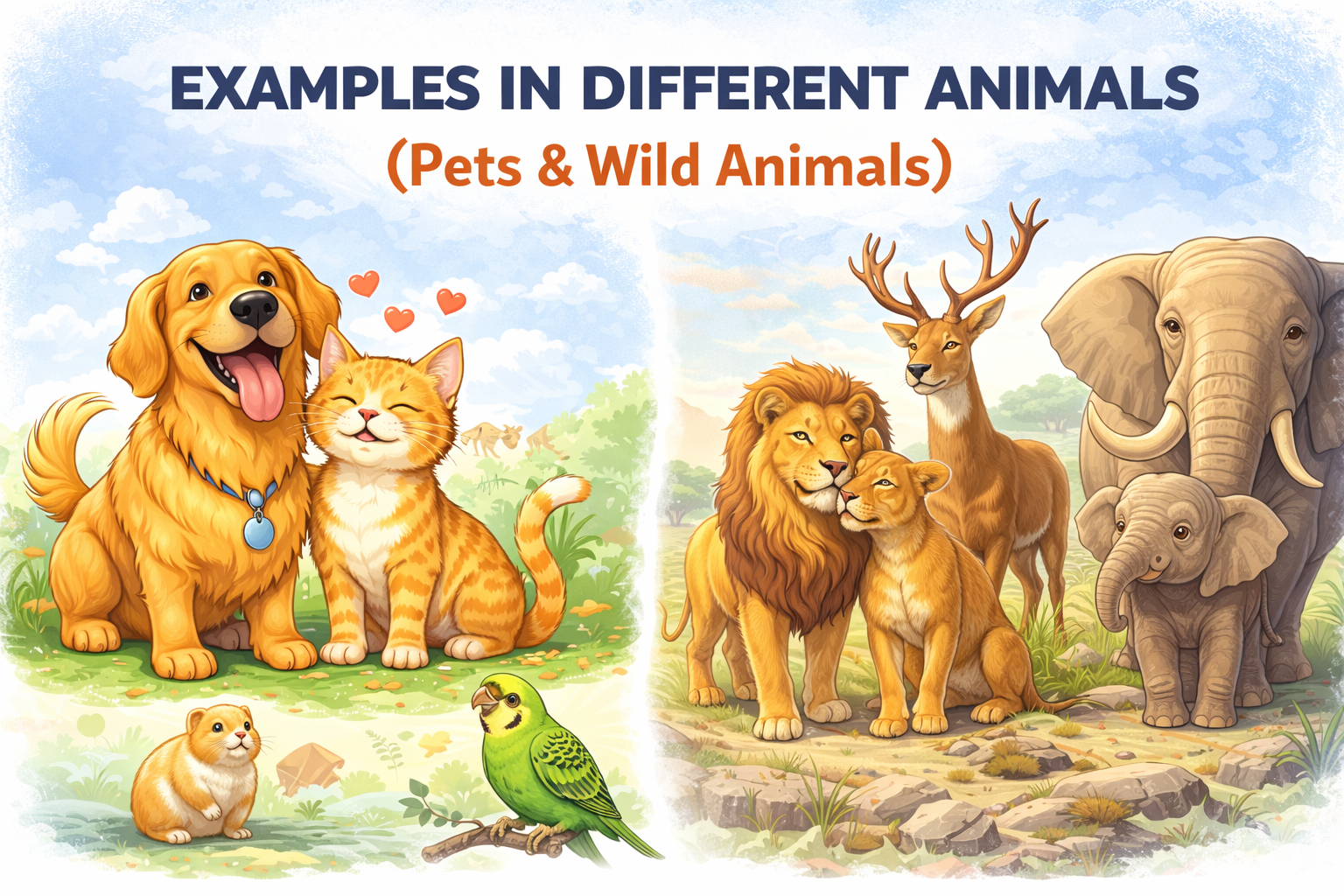
Dogs
Happy dog signs
- Relaxed body posture
- Wagging tail at medium height
- Play bow posture
- Soft eyes and open mouth
Stressed dog signs
- Tail tucked between legs
- Excessive yawning or lip licking
- Avoiding eye contact
- Pacing or whining
Cats
Happy cat signs
- Slow blinking
- Purring with relaxed posture
- Upright tail with slight curve
- Kneading with paws
Stressed cat signs
- Flattened ears
- Dilated pupils
- Hissing or growling
- Hiding for long periods
Small Pets (Rabbits, Hamsters)
Happy signs
- Gentle hopping or exploring
- Eating normally
- Calm grooming
Stress signs
- Freezing or staying motionless
- Rapid breathing
- Excessive chewing on cage bars
Wild Animals
In wildlife, stress behaviors include:
- Sudden flight or freezing
- Aggressive displays
- Avoidance of humans
These reactions protect animals from perceived threats.
Is This Behavior Normal or a Problem?
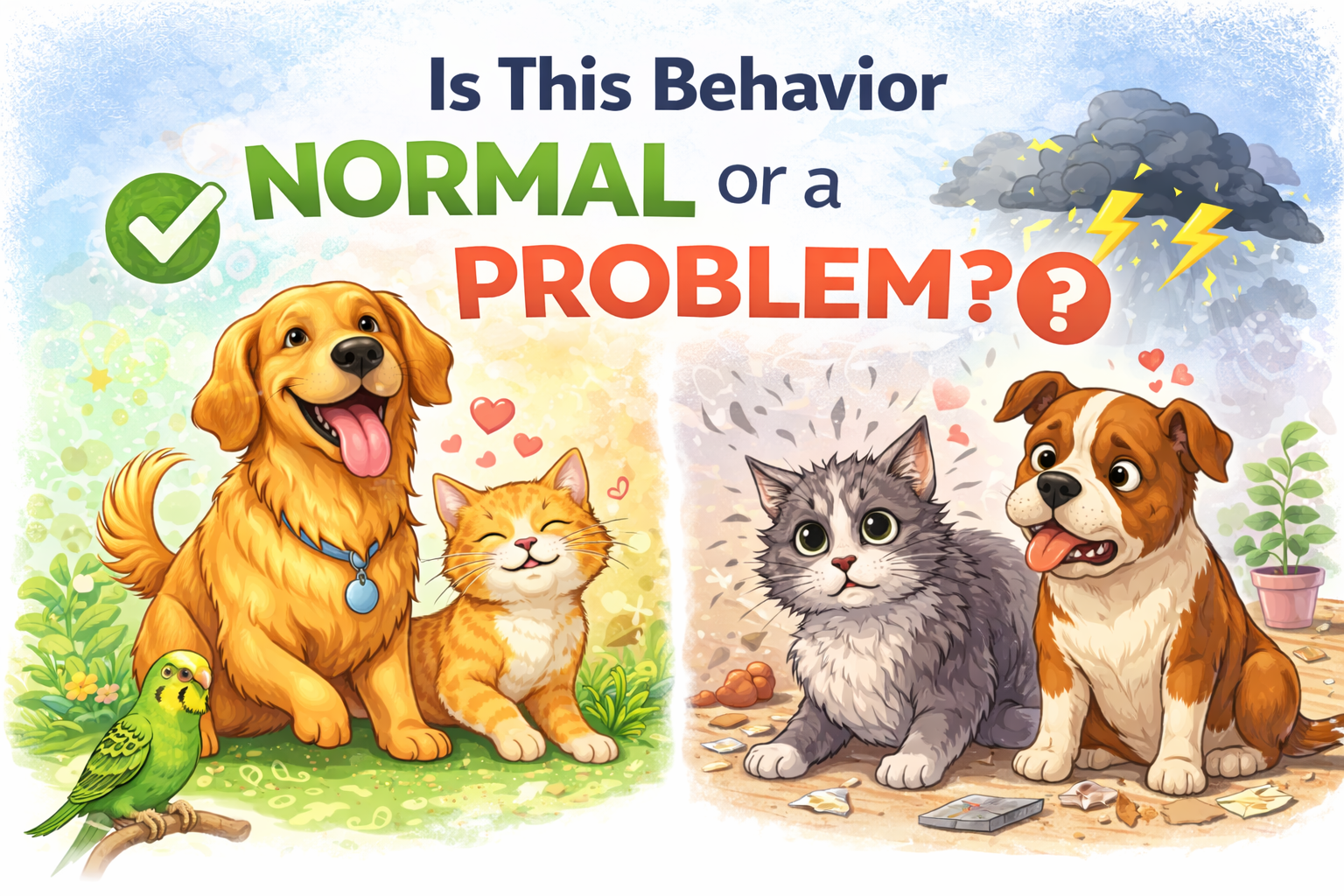
Some stress is normal and temporary, especially during:
- Vet visits
- New environments
- Social introductions
However, stress becomes a problem when it is:
- Chronic or long-lasting
- Causing health issues
- Leading to aggression or withdrawal
Red Flags to Watch For
- Sudden personality changes
- Loss of appetite
- Repetitive behaviors
- Excessive fear or aggression
Persistent stress should always be addressed.
How Humans Should Respond (Care, Training & Safety Tips)
When Your Pet Is Happy
- Reinforce positive behavior with praise
- Maintain routines
- Encourage gentle play and enrichment
When Your Pet Is Stressed
- Identify the trigger
- Remove or reduce stressors
- Provide a safe space
- Avoid punishment
- Use calm body language
Training & Care Tips
- Use positive reinforcement training
- Offer mental stimulation (toys, puzzles)
- Schedule regular health checks
- Respect your pet’s personal boundaries
Human behavior directly affects animal emotional health.
Interesting Behavior Facts
- Dogs can sense human stress through scent changes
- Cats often hide illness, showing stress first
- Animals mirror the emotional tone of their caregivers
- Chronic stress can shorten animal lifespan
- Happy pets learn faster than stressed ones
These facts highlight how closely behavior and well-being are connected.
Frequently Asked Questions (FAQ)
1. How can I tell if my pet is truly happy?
A happy pet shows relaxed posture, curiosity, normal appetite, and positive social interaction.
2. Can stress cause health problems in pets?
Yes. Long-term stress can weaken immunity, cause digestive issues, and increase behavior problems.
3. Do all animals show stress the same way?
No. Each species and individual expresses stress differently, based on instincts and personality.
4. How long does it take for a stressed pet to calm down?
It depends on the cause. Mild stress may pass quickly, while chronic stress needs long-term management.
5. Should I consult a professional for pet stress?
Yes. If stress behaviors persist, a veterinarian or animal behaviorist can help.
Conclusion & Key Takeaways
Understanding the signs your pet is happy or stressed allows you to respond with empathy, care, and responsibility.