Why Do Cats Knead With Their Paws?
Cats have many adorable and sometimes puzzling behaviors, but one of the most iconic is kneading—when a cat rhythmically presses its front paws in and out against a soft surface. If you’ve ever wondered why do cats knead with their paws, you’re not alone. This behavior fascinates pet owners, animal lovers, and even scientists because it connects a cat’s earliest memories with its adult emotions and instincts.
Understanding kneading isn’t just about curiosity. It helps us read a cat’s emotional state, strengthen the human–cat bond, and know when a behavior is normal—or when it might signal a problem.
Introduction: Why This Cat Behavior Matters
Kneading is more than a cute habit often called “making biscuits.” It’s a deeply rooted behavior that starts in kittenhood and continues into adulthood. Cats knead when they feel relaxed, safe, affectionate, or emotionally comforted.
From an animal behavior perspective, kneading provides insight into:
- Early developmental instincts
- Emotional regulation in cats
- Social bonding between cats and humans
By learning why cats knead, we can better understand their needs and respond in ways that improve their well-being.
What Is This Behavior? (Simple Explanation)
Kneading is a repetitive motion where a cat alternates pushing its left and right front paws against a surface.
Common features of kneading:
- Slow, rhythmic paw movements
- Often paired with purring
- Occurs on soft surfaces (blankets, laps, beds)
- Sometimes includes claws extending slightly
Most cats knead when they’re calm and content, though the exact reason can vary depending on context.
Why Do Cats Knead With Their Paws?

From an animal behaviorist’s point of view, kneading is a multi-purpose behavior with emotional, instinctive, and biological roots.
1. A Behavior Learned in Kittenhood
Kneading begins when kittens nurse. Pressing against their mother’s belly:
- Stimulates milk flow
- Provides comfort and security
This positive association often lasts for life.
2. Emotional Comfort and Security
Adult cats knead when they feel safe and relaxed. It’s similar to a human returning to a comforting habit when stressed or happy.
3. Scent Marking and Territory
Cats have scent glands in their paws. Kneading:
- Releases pheromones
- Marks a person or object as “theirs”
This explains why cats often knead their favorite humans.
4. Preparing a Resting Spot (Instinct)
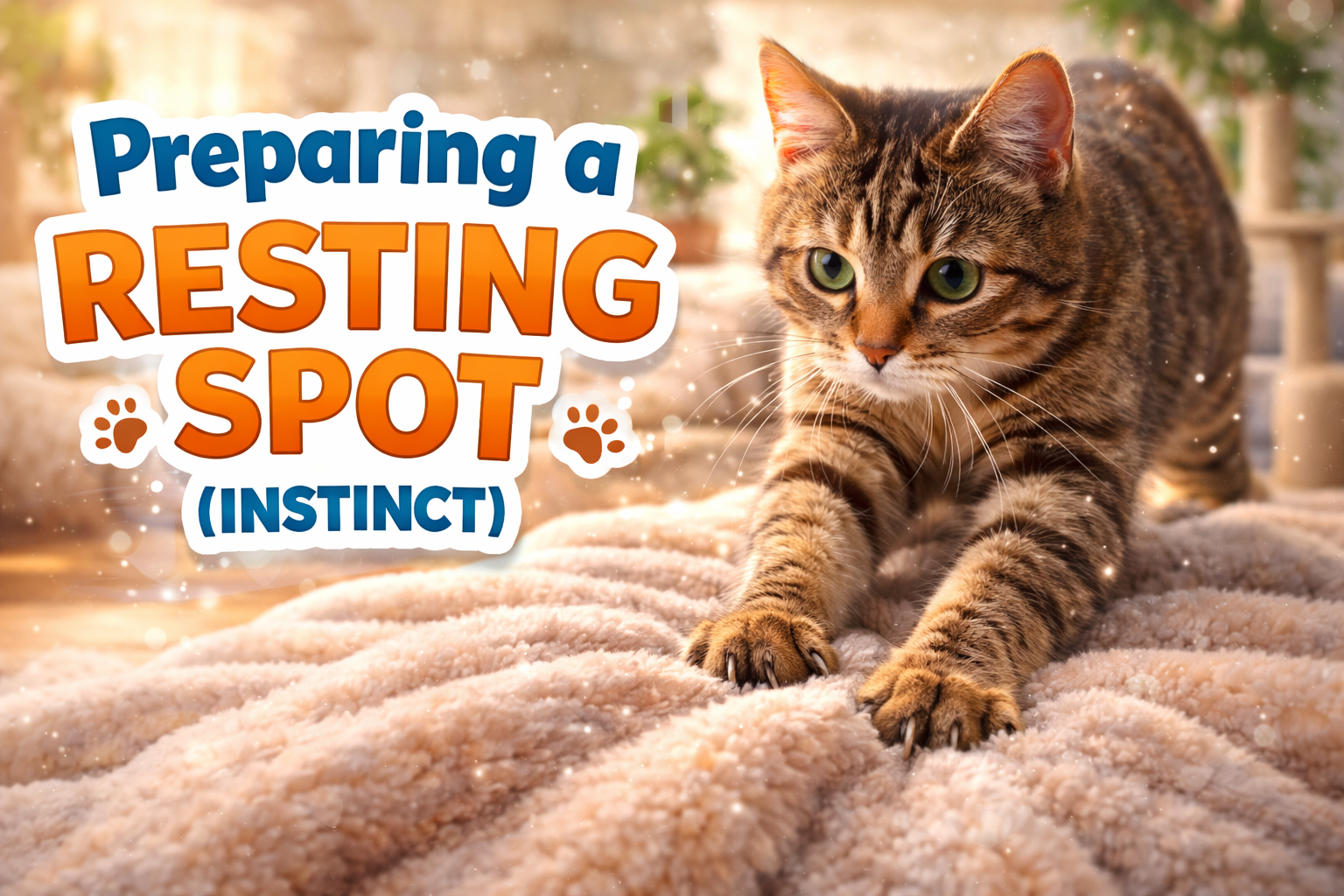
In the wild, cats knead grass or leaves to:
- Flatten a sleeping area
- Check for danger (sharp objects, insects)
Domestic cats still carry this instinct.
5. Hormonal and Reproductive Signals
Unspayed female cats may knead more frequently during heat cycles as part of mating-related behaviors.
Common Triggers and Causes of Kneading
Cats don’t knead randomly. Certain situations make it more likely.
Emotional Triggers
- Feeling relaxed or sleepy
- Bonding with a trusted human
- Comfort after stress
Environmental Triggers
- Soft textures (fleece, wool, bedding)
- Warm places
- Quiet, safe environments
Physical & Biological Triggers
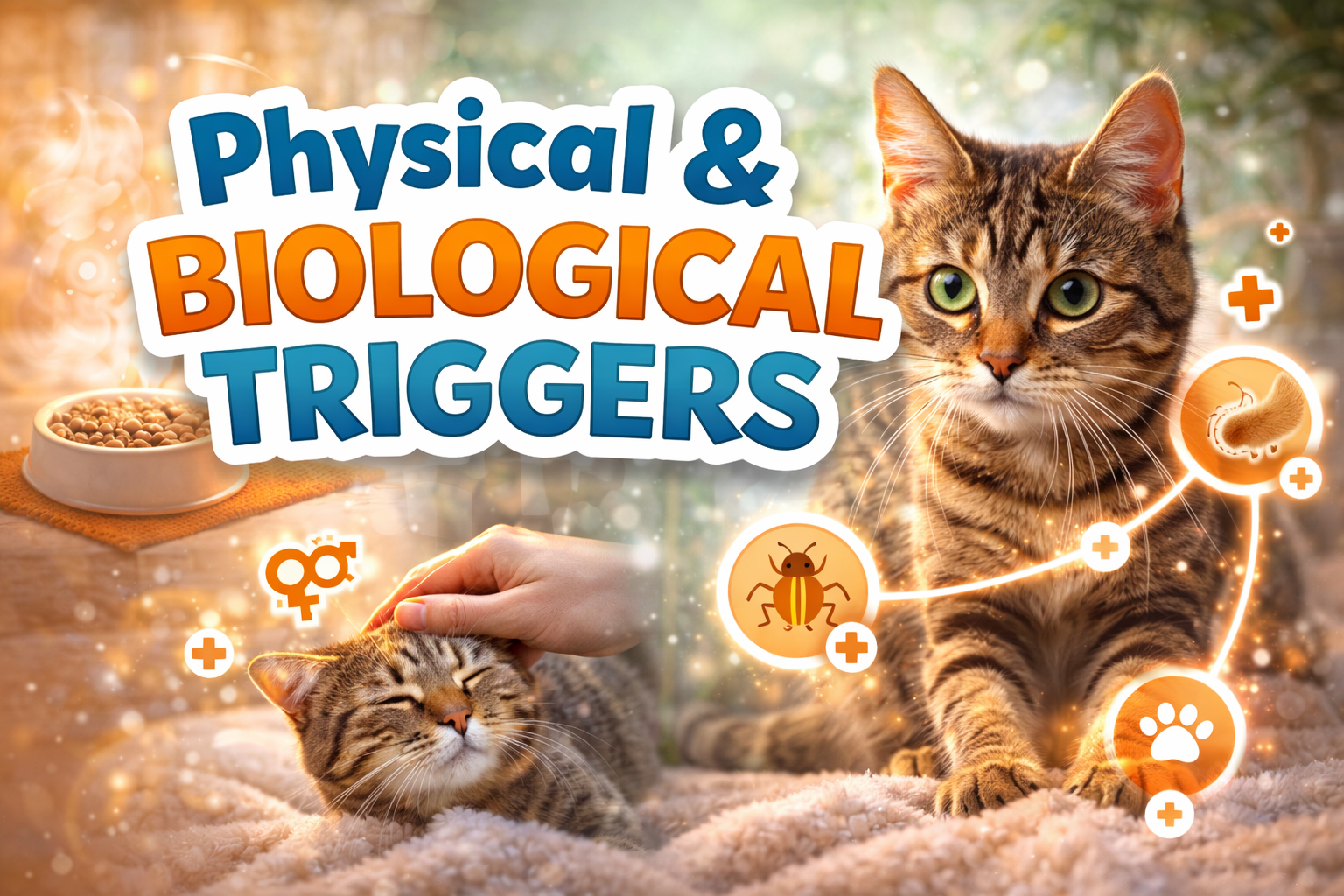
- Hormonal changes
- Early weaning (can increase kneading behavior)
Tip: Cats that knead excessively may be self-soothing.
Examples in Different Animals (Pets & Wild Animals)
Kneading isn’t exclusive to domestic cats. Similar behaviors appear across species.
Domestic Animals
- Dogs: Puppies knead or paw at bedding before sleep
- Rabbits: Push and dig into soft surfaces for nesting
- Ferrets: Paw and dig to prepare resting areas
Wild Animals
- Big cats (lions, tigers): Knead before lying down
- Wolves: Paw and circle resting spots
These behaviors serve similar purposes: comfort, safety, and environmental preparation.
Is This Behavior Normal or a Problem?
When Kneading Is Completely Normal
- Happens during calm or happy moments
- Paired with purring and relaxed posture
- Occasional claw extension without aggression
When Kneading May Be a Concern
- Compulsive or constant kneading
- Paired with anxiety signs (over-grooming, vocal stress)
- Sudden increase after trauma or environmental change
If kneading seems obsessive or stressful, a veterinary or behavior consultation may help.
How Humans Should Respond (Care, Training & Safety Tips)
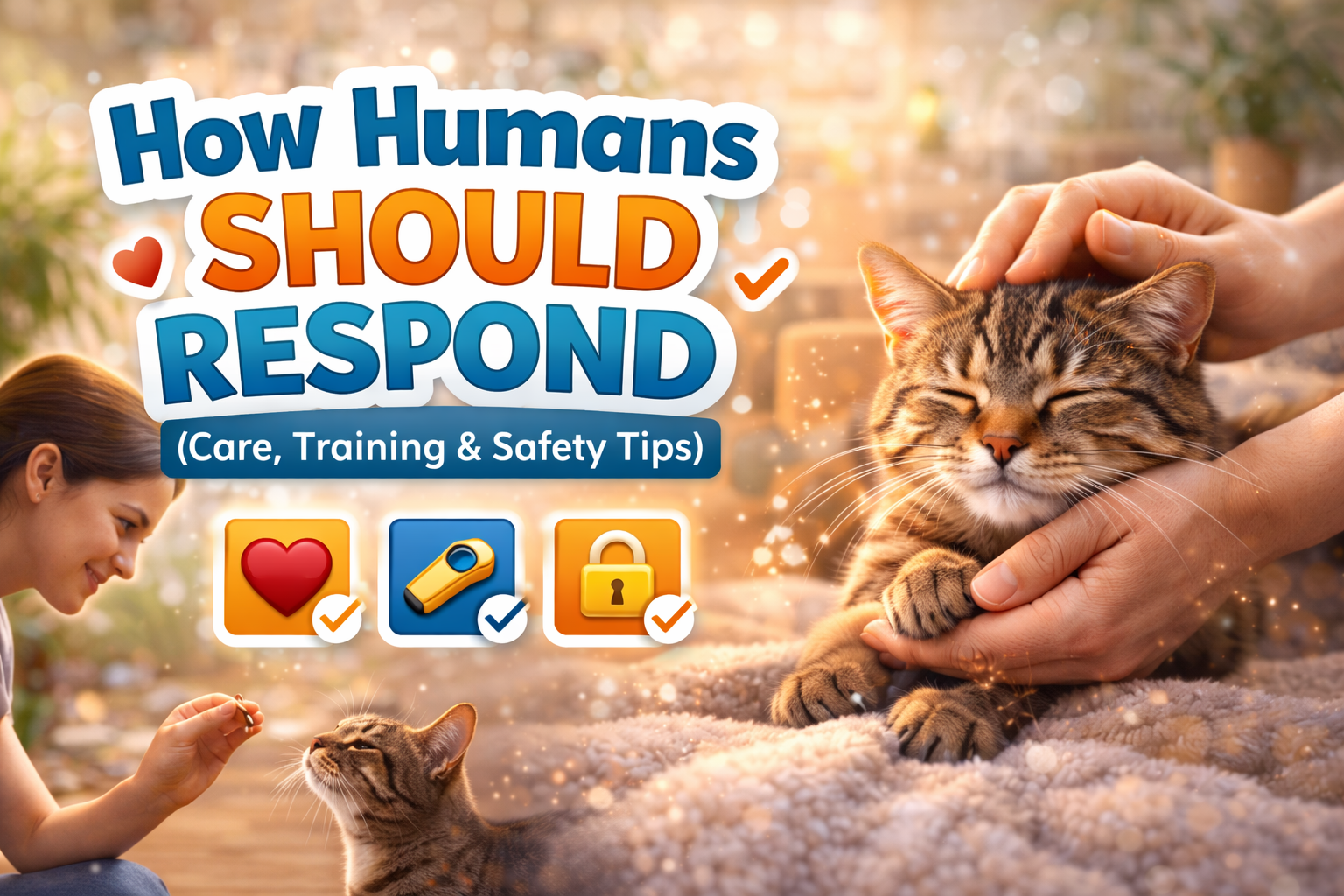
Kneading is usually a positive behavior, but it can sometimes be uncomfortable—especially when claws are involved.
What You Should Do
- Gently place a blanket between your lap and your cat
- Keep your cat’s nails trimmed
- Stay calm and still
What You Should Not Do
- Punish or scold your cat
- Push them away aggressively
- Yell or create fear
Training-Friendly Alternatives
- Redirect kneading to a soft pillow
- Offer designated “kneading blankets”
- Reward calm, gentle kneading
Responding gently reinforces trust and security.
Interesting Cat Kneading Facts
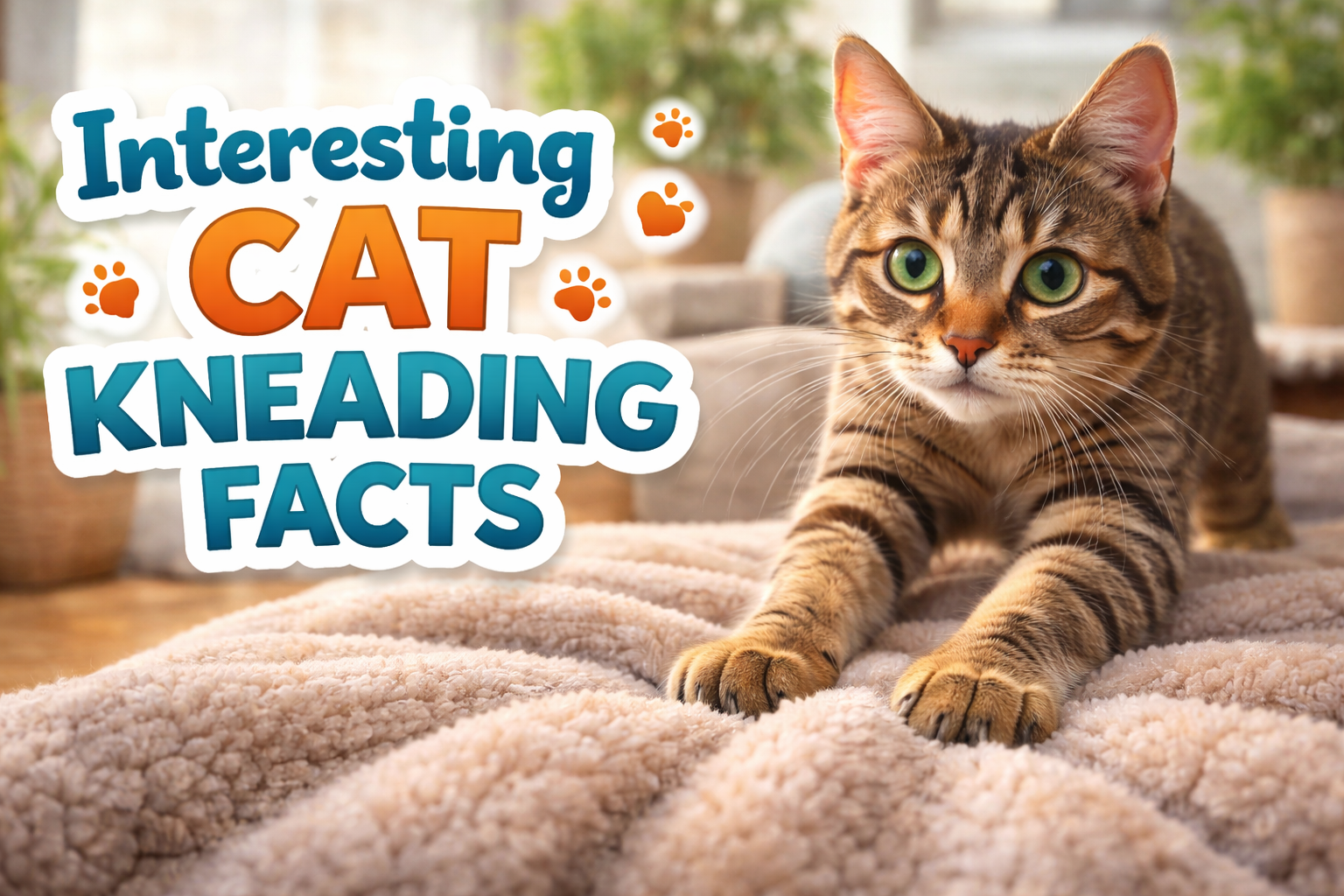
- Not all cats knead—personality matters
- Some cats knead only one paw at a time
- Male and female cats both knead
- Older cats often knead less frequently
- Kneading is linked to early bonding experiences
Frequently Asked Questions (FAQ)
1. Why do cats knead with their paws on humans?
Cats knead people to show comfort, affection, and bonding. It also marks you with their scent.
2. Is kneading a sign of love?
Yes. In most cases, kneading means your cat feels safe and emotionally connected to you.
3. Why does my cat knead and bite at the same time?
This can be a sign of overstimulation. Gentle redirection usually helps.
4. Should I stop my cat from kneading?
No, unless it causes pain or injury. Kneading is a natural and healthy behavior.
5. Do all cats knead?
No. Some cats knead rarely or not at all due to personality or early life experiences.
Conclusion & Key Takeaways
So, why do cats knead with their paws? Because it’s a powerful blend of instinct, memory, comfort, and communication.