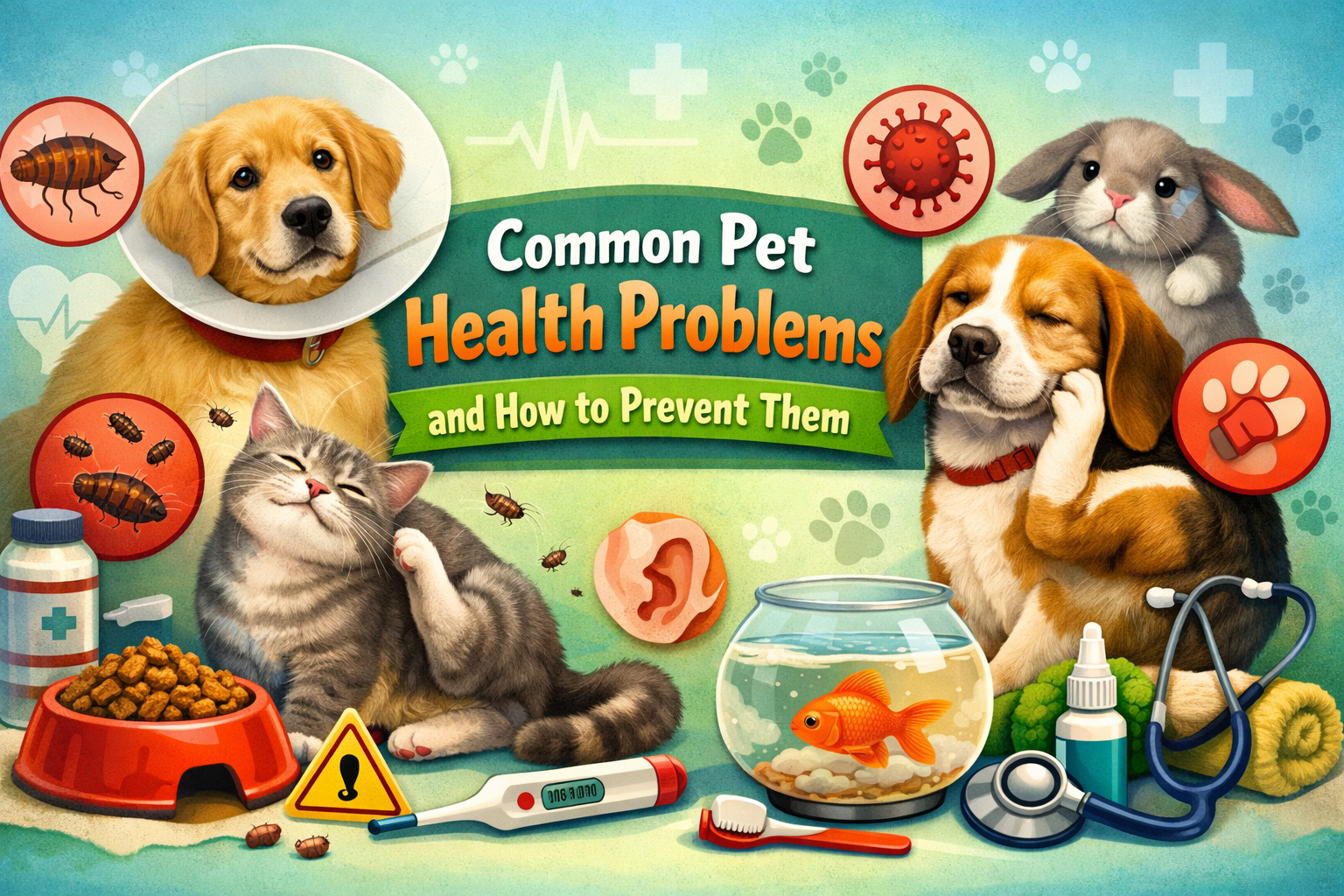
Common Pet Health Problems and How to Prevent Them
Common pet health problems and how to prevent them is one of the most important topics every pet owner should understand—especially if you’re new to caring for dogs or cats. Many health issues don’t appear overnight. They develop slowly due to poor diet, lack of hygiene, missed vet visits, or simple daily mistakes.
The good news? Most common pet health problems are preventable. With the right knowledge and consistent care, you can protect your pet’s health, reduce vet bills, and help your furry companion live a longer, happier life.
This complete guide explains the most common health issues in pets, why prevention matters, and exactly what you should do—step by step.
Why Proper Pet Care Matters
Pets depend on us for everything—from food and shelter to health and safety. When proper care is missing, even small issues can turn into serious medical problems.
Good preventive care helps:
- Detect health problems early
- Strengthen your pet’s immune system
- Reduce stress and anxiety
- Extend lifespan and quality of life
- Lower long-term veterinary costs
Healthy pets are not just happier—they’re easier to manage and more active family members.
Common Mistakes Pet Owners Make
Many pet health problems start with avoidable mistakes. Beginners (and even experienced owners) often make these errors:
- Skipping regular vet checkups
- Feeding human food without checking safety
- Overfeeding or underfeeding
- Ignoring dental care
- Delaying parasite prevention
- Assuming indoor pets don’t need vaccines
- Not noticing small behavior changes
Preventing these mistakes is the first step toward better pet health.
Step-by-Step Care Guide to Prevent Pet Health Problems
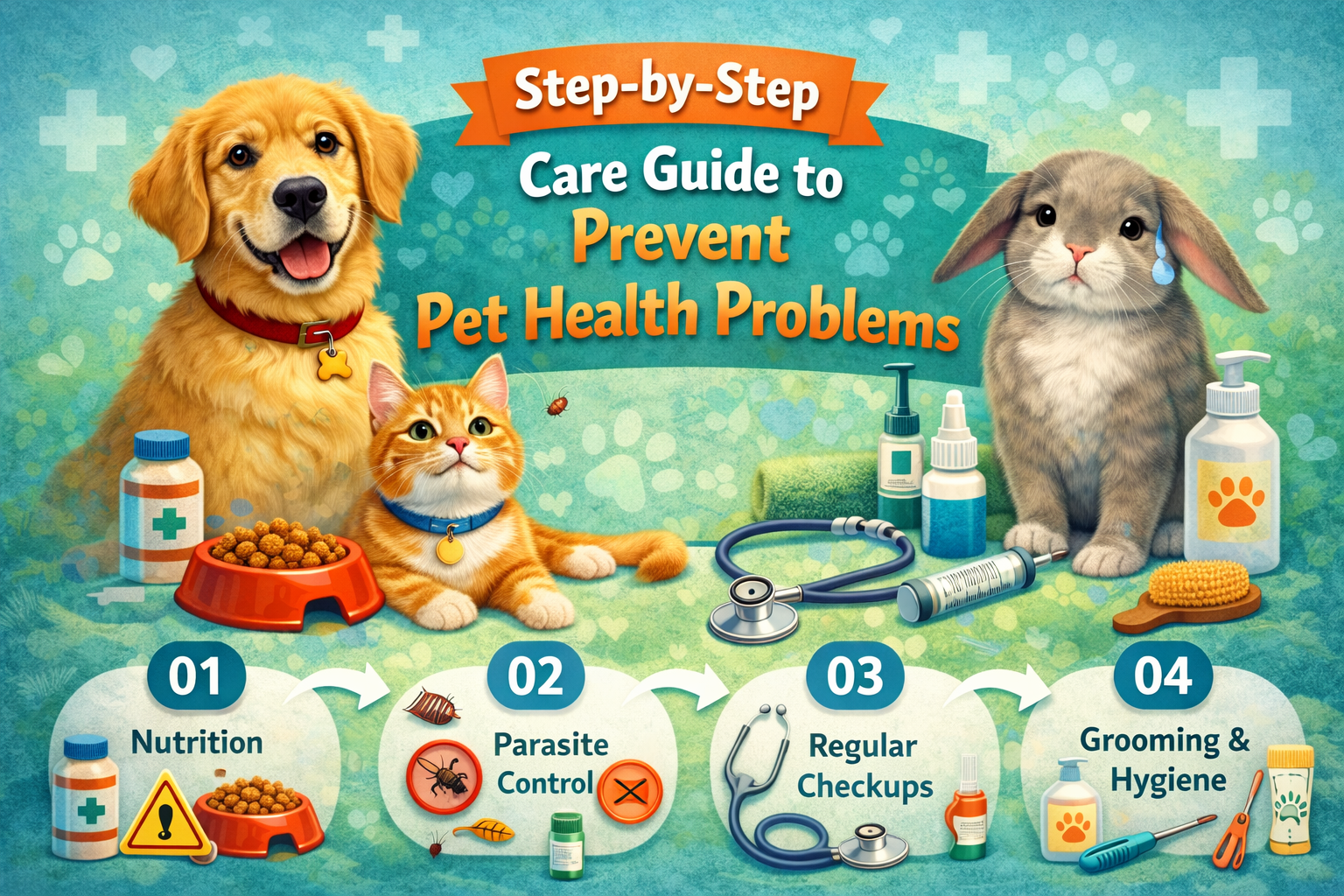
Step 1: Observe Your Pet Daily
Watch for changes in:
- Appetite
- Energy levels
- Bathroom habits
- Skin, coat, and eyes
- Mood or behavior
Early signs often look small but matter a lot.
Step 2: Maintain Clean Living Spaces
- Wash food and water bowls daily
- Clean litter boxes and sleeping areas
- Keep toys clean and safe
A clean environment reduces bacteria and parasites.
Step 3: Follow a Health Routine
Create a schedule for:
- Feeding
- Exercise
- Grooming
- Medications
- Vet visits
Consistency prevents many long-term health issues.
Daily, Weekly, and Monthly Pet Care Tips
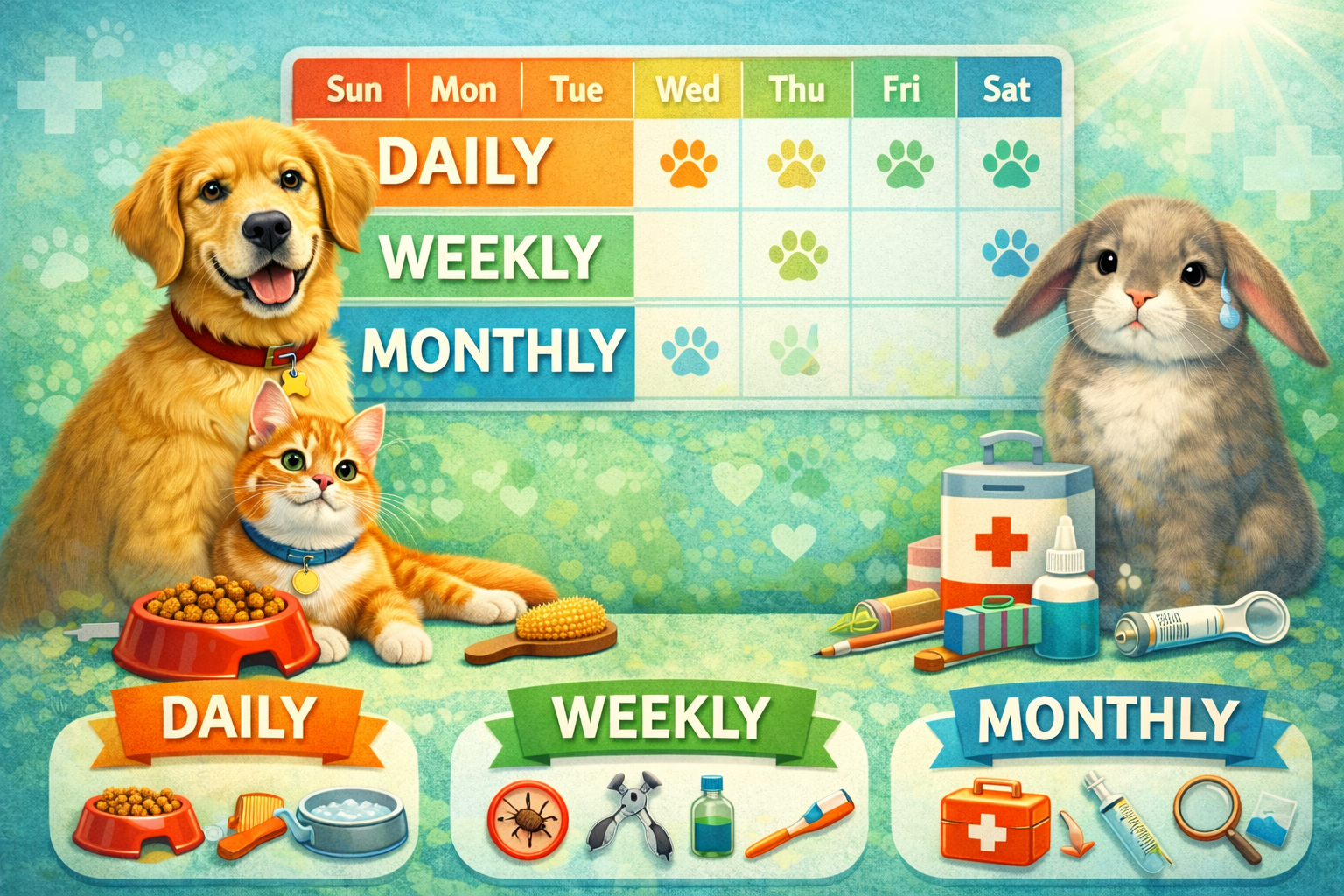
Daily Pet Care Checklist
- Fresh water at all times
- Proper portioned meals
- Physical activity or playtime
- Quick health check (eyes, ears, coat)
Weekly Pet Care Tasks
- Brush fur to remove dirt and loose hair
- Check ears for redness or odor
- Inspect paws and nails
- Wash bedding and toys
Monthly Pet Care Essentials
- Nail trimming
- Flea and tick prevention
- Weight check
- Deep cleaning of pet areas
These simple routines significantly reduce common pet health problems.
Diet & Nutrition Tips for Healthy Pets
Poor diet is one of the leading causes of pet illness.
What a Healthy Pet Diet Should Include
- High-quality protein
- Balanced vitamins and minerals
- Healthy fats
- Age-appropriate formulas
Foods to Avoid
- Chocolate
- Grapes and raisins
- Onions and garlic
- Excessive treats
- Fatty human foods
Feeding Tips
- Follow portion guidelines
- Avoid free-feeding unless recommended
- Transition food gradually
- Keep feeding times consistent
Proper nutrition supports digestion, skin health, weight control, and immunity.
Health, Hygiene & Safety Tips
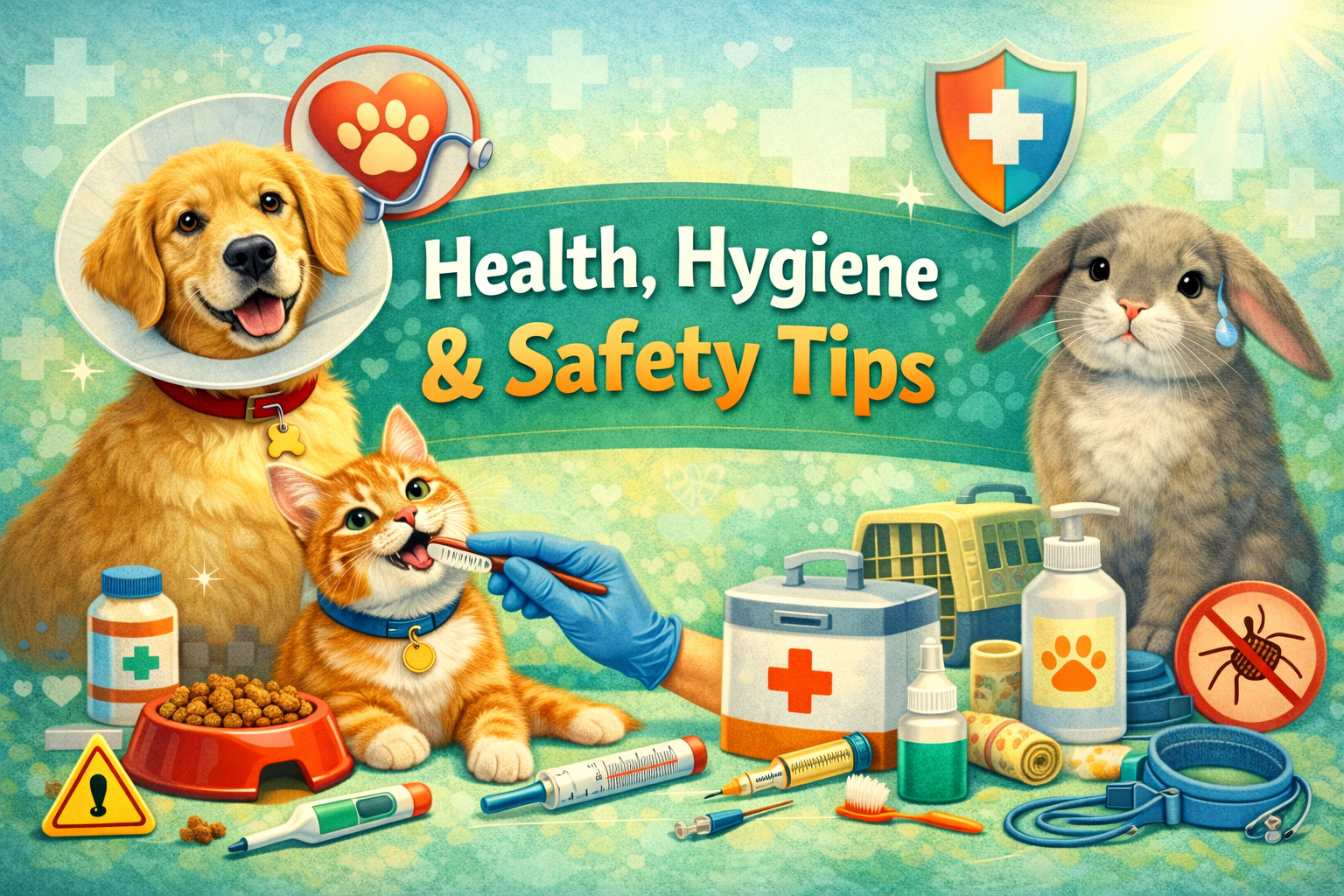
Common Pet Health Problems to Watch For
- Obesity
- Dental disease
- Fleas and ticks
- Ear infections
- Skin allergies
- Digestive issues
- Urinary problems
Hygiene & Safety Best Practices
- Brush teeth 2–3 times per week
- Use vet-approved grooming products
- Keep harmful chemicals locked away
- Provide fresh air and safe play areas
- Use collars or microchips for identification
Preventive hygiene saves pets from pain and owners from emergency visits.
When to Visit a Vet
You should visit a vet:
- At least once a year for checkups
- When vaccinations are due
- If your pet shows unusual behavior
- After injuries or accidents
- For sudden weight loss or gain
- If vomiting or diarrhea lasts more than 24 hours
Never wait if your pet seems in pain or unwell. Early treatment saves lives.
Frequently Asked Questions (FAQ)
1. What are the most common pet health problems?
The most common issues include obesity, dental disease, parasites, skin allergies, ear infections, and digestive problems.
2. How can I prevent pet health problems naturally?
Regular exercise, balanced nutrition, clean living spaces, routine grooming, and early vet visits are the best natural prevention methods.
3. Do indoor pets still need vet checkups?
Yes. Indoor pets can still develop infections, dental issues, obesity, and chronic illnesses.
4. How often should I groom my pet?
It depends on the breed, but most pets benefit from weekly brushing and monthly grooming routines.
5. Is preventive care really worth the cost?
Absolutely. Preventive care costs far less than emergency treatments and improves your pet’s lifespan and comfort.
Conclusion: A Healthy Pet Starts With You
Common pet health problems and how to prevent them comes down to daily habits and awareness. Small actions—done consistently—make the biggest difference.
Helpful Reminder for Pet Owners
- Watch your pet closely
- Feed wisely
- Keep routines consistent
- Never ignore small changes
- Partner with your veterinarian
Your pet gives you unconditional love. In return, give them the care they deserve.