Understanding Animal Body Language: A Complete Guide to Animal Behavior
Introduction: Why Understanding Animal Body Language Matters
Understanding animal body language is one of the most powerful skills for anyone who lives with, studies, or simply loves animals. Animals may not speak human languages, but they constantly communicate through posture, movement, facial expressions, and vocal cues. When we learn to read these signals, we can better meet their needs, prevent accidents, and build stronger bonds.
In the first moments of any interaction, animals tell us whether they feel safe, curious, stressed, or threatened. Misreading these signs can lead to fear-based reactions or even injuries. That’s why understanding animal body language is essential for pet owners, students of animal behavior, and anyone interested in animal welfare.
This guide breaks down animal body language in a clear, practical way—covering why animals use it, what triggers it, and how humans should respond.
What Is Animal Body Language?
Animal body language is non-verbal communication used by animals to express emotions, intentions, and physical states. Instead of words, animals rely on:
- Body posture
- Tail and ear position
- Eye contact and facial expressions
- Movement speed and direction
- Vocal sounds combined with physical cues
These signals help animals communicate with others of their own species—and with humans.
Simple Example
- A relaxed dog with a loose tail and soft eyes is likely friendly.
- A cat with flattened ears and a twitching tail may feel threatened.
Learning these patterns helps us interpret behavior correctly rather than guessing.
Why Animals Show Body Language
Animals evolved body language as a survival tool. Long before domestication, reading signals quickly meant the difference between safety and danger.
Main reasons animals use body language:
- Survival and self-protection – warning others to stay away
- Social communication – showing friendliness, dominance, or submission
- Emotional expression – fear, excitement, curiosity, or calm
- Reproductive signaling – attracting mates or setting boundaries
- Pain or discomfort signals – indicating illness or injury
Unlike humans, animals rarely hide their feelings. Their bodies often reveal the truth before their actions do.
Common Triggers and Causes of Body Language Changes
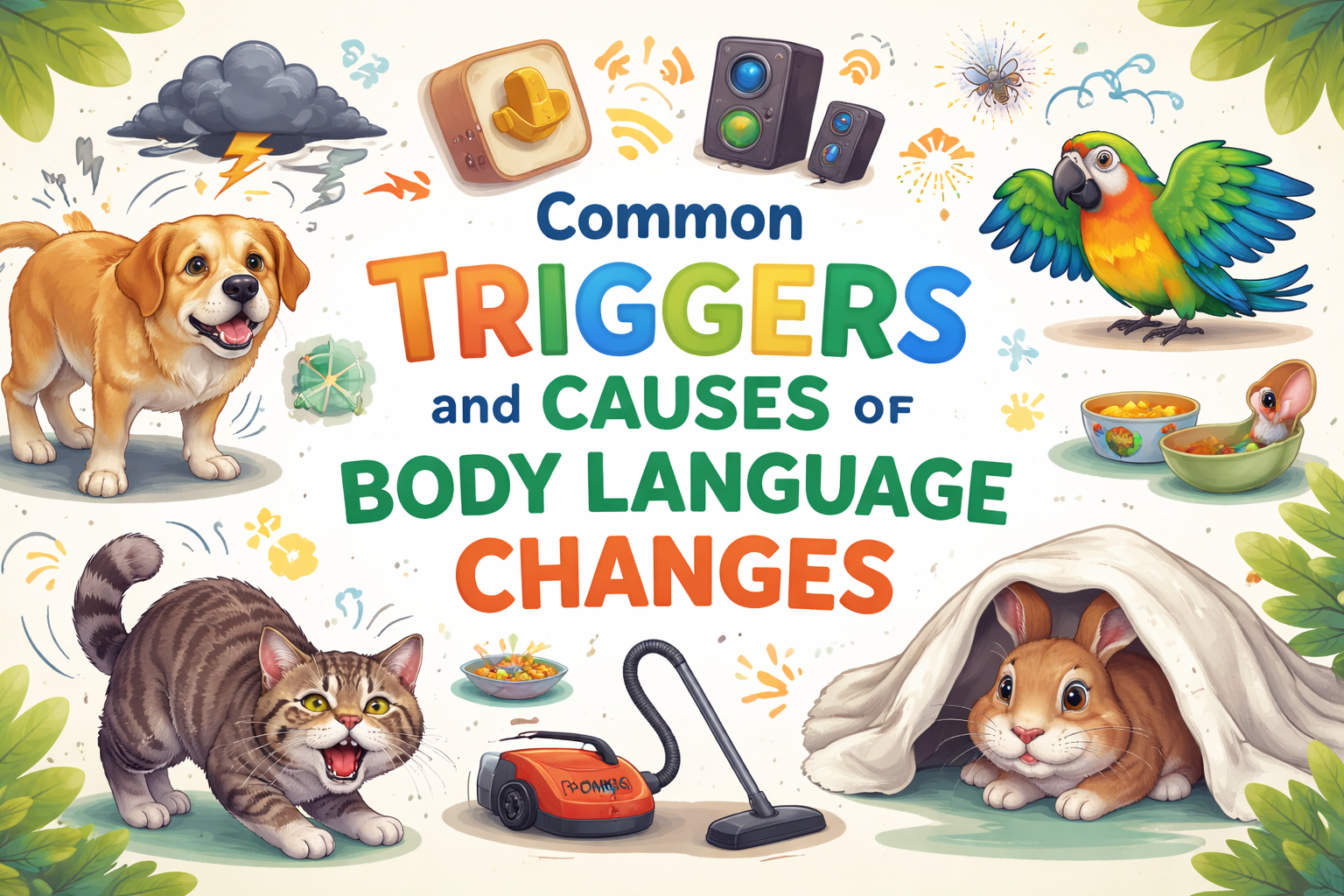
Animals don’t display body language randomly. Specific situations trigger specific signals.
Common triggers include:
- New environments
- Loud noises or sudden movements
- Presence of unfamiliar humans or animals
- Handling or restraint
- Hunger, pain, or illness
- Training sessions or discipline
Environmental vs. Emotional Triggers
- Environmental: storms, crowds, confined spaces
- Emotional: fear, excitement, frustration, trust
Recognizing the trigger helps you respond appropriately and reduce stress.
Understanding Animal Body Language in Different Animals
1. Dogs
Dogs are expressive and use their whole body to communicate.
Common dog signals:
- Wagging tail (speed and height matter)
- Relaxed body = comfort
- Stiff posture = tension or alertness
- Yawning or lip licking = stress, not tiredness
- Avoiding eye contact = submission or discomfort
Tip: A wagging tail doesn’t always mean happiness. A stiff, high tail can signal aggression.
2. Cats
Cats communicate more subtly than dogs.
Key cat body language signs:
- Upright tail with a curve = friendly
- Puffed-up tail = fear
- Slow blinking = trust
- Flattened ears = warning
- Sudden tail flicking = irritation
Cats often give clear warnings before scratching or biting—if you know what to look for.
3. Birds
Birds rely heavily on posture and feather position.
Bird body language includes:
- Fluffed feathers = cold, relaxed, or unwell
- Wing spreading = stretching or dominance
- Beak clicking = warning
- Rapid head movement = excitement or alertness
Silence in a normally vocal bird can also signal stress.
4. Horses and Large Animals

Large animals communicate clearly but can be dangerous if misunderstood.
Horse body language examples:
- Ears forward = interest
- Ears pinned back = anger or fear
- Tail swishing = irritation
- Stomping = frustration or discomfort
Understanding these signs improves safety for handlers and riders.
5. Wild Animals
Wild animals use body language mainly to avoid conflict.
Common wild animal signals:
- Freezing = assessing danger
- Raised fur or feathers = threat display
- Showing teeth or horns = final warning
Ignoring these signals can provoke defensive attacks.
Is This Behavior Normal or a Problem?
Not all body language signals indicate a problem. Many are normal responses to everyday situations.
Normal behavior:
- Temporary stress signals in new environments
- Playful postures during social interaction
- Alertness when hearing unfamiliar sounds
Potential problem signs:
- Sudden changes in behavior
- Constant fear or aggression
- Repetitive stress signals
- Withdrawal or inactivity
If body language changes suddenly or persists, it may indicate:
- Pain or illness
- Chronic stress
- Poor socialization
- Environmental issues
When in doubt, consult a veterinarian or certified animal behaviorist.
How Humans Should Respond to Animal Body Language
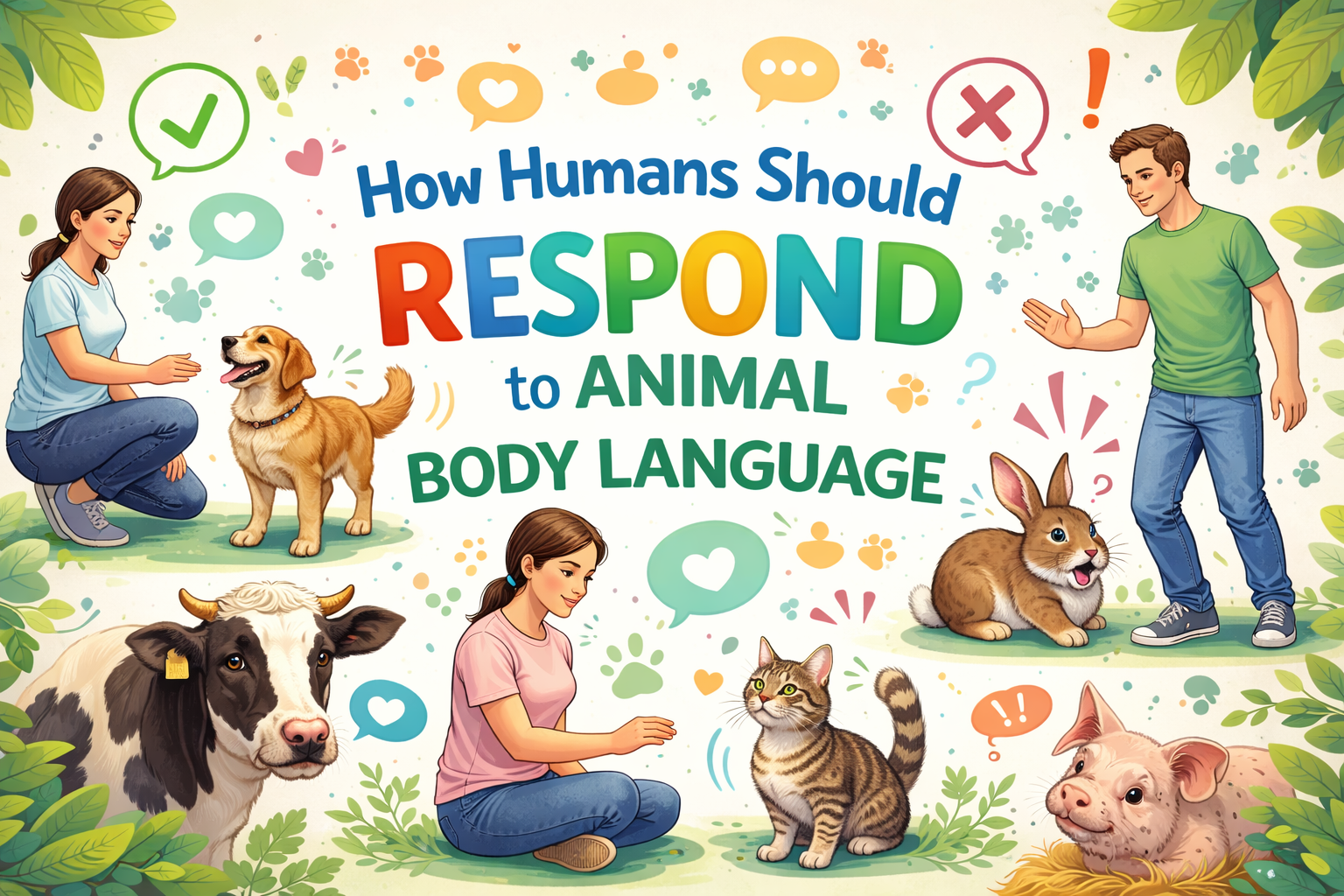
Understanding animal body language is only useful if we respond correctly.
Best practices for humans:
- Observe before acting – don’t rush interactions
- Respect warning signs – back away if needed
- Avoid punishment – it increases fear and confusion
- Use calm movements and voice
- Reward relaxed behavior
Safety tips:
- Never force contact with a fearful animal
- Teach children to recognize warning signs
- Give animals space when eating or resting
Positive, respectful responses build trust and reduce behavior problems.
Interesting Facts About Animal Body Language
- Dogs can read human facial expressions surprisingly well
- Cats communicate more with humans than with other cats
- Horses can recognize human emotions through posture
- Many animals yawn as a stress signal, not from tiredness
- Eye contact can mean trust in some species and threat in others
These facts show how complex and intelligent animal communication really is.
Frequently Asked Questions (FAQ)
1. What is animal body language in simple terms?
Animal body language is how animals communicate using posture, movement, and expressions instead of words.
2. Why is understanding animal body language important?
It helps prevent bites, scratches, and stress while improving human–animal relationships.
3. Can animal body language change over time?
Yes. Age, health, environment, and experiences all influence behavior signals.
4. Is aggressive body language always dangerous?
Not always. It’s often a warning sign asking for space, not an attack.
5. How can I learn animal body language better?
Observe animals closely, learn species-specific signals, and focus on context rather than one sign alone.
Conclusion & Key Takeaways
Understanding animal body language allows us to see the world from an animal’s perspective. These silent signals tell stories of emotion, intention, and need. When we learn to listen with our eyes, we become better caregivers, trainers, and companions.
Key takeaways:
- Animals constantly communicate through body language
- Context matters more than a single signal
- Respecting signals improves safety and trust
- Learning body language strengthens human–animal bonds
Whether you’re a pet owner, student, or animal lover, mastering this skill leads to healthier and happier interactions.