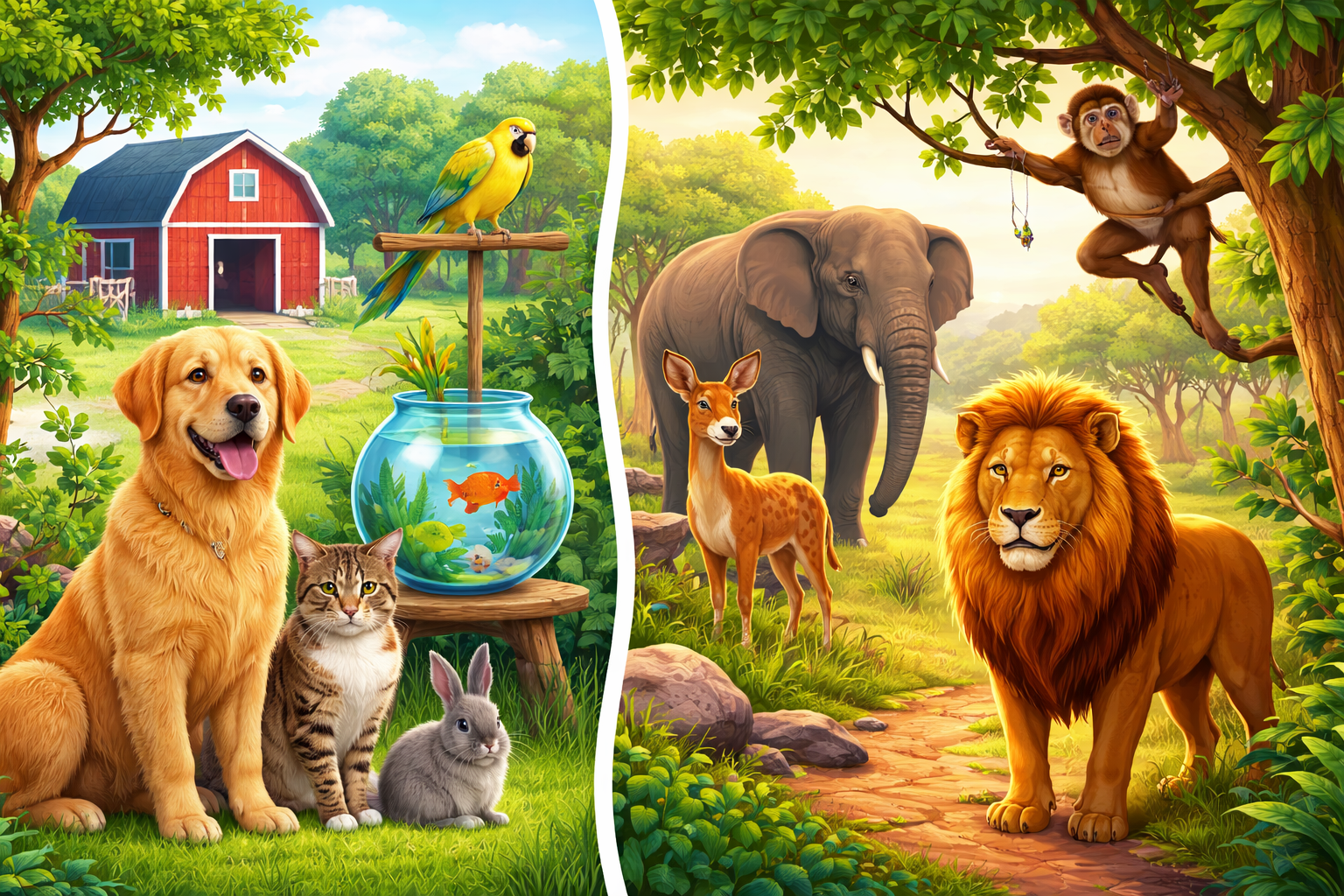
What Is the Difference Between Domestic and Wild Animals?
Understanding the difference between domestic and wild animals helps us appreciate how animals live, survive, and interact with humans. Some animals share our homes, farms, and cities, while others thrive far away in forests, deserts, oceans, and grasslands.
This topic is especially interesting for students, animal lovers, and general readers, because domestic and wild animals differ not only in where they live, but also in behavior, diet, reproduction, and their relationship with people. In this article, we’ll explore these differences clearly and simply, using science-based explanations and real-world examples.
Scientific Classification
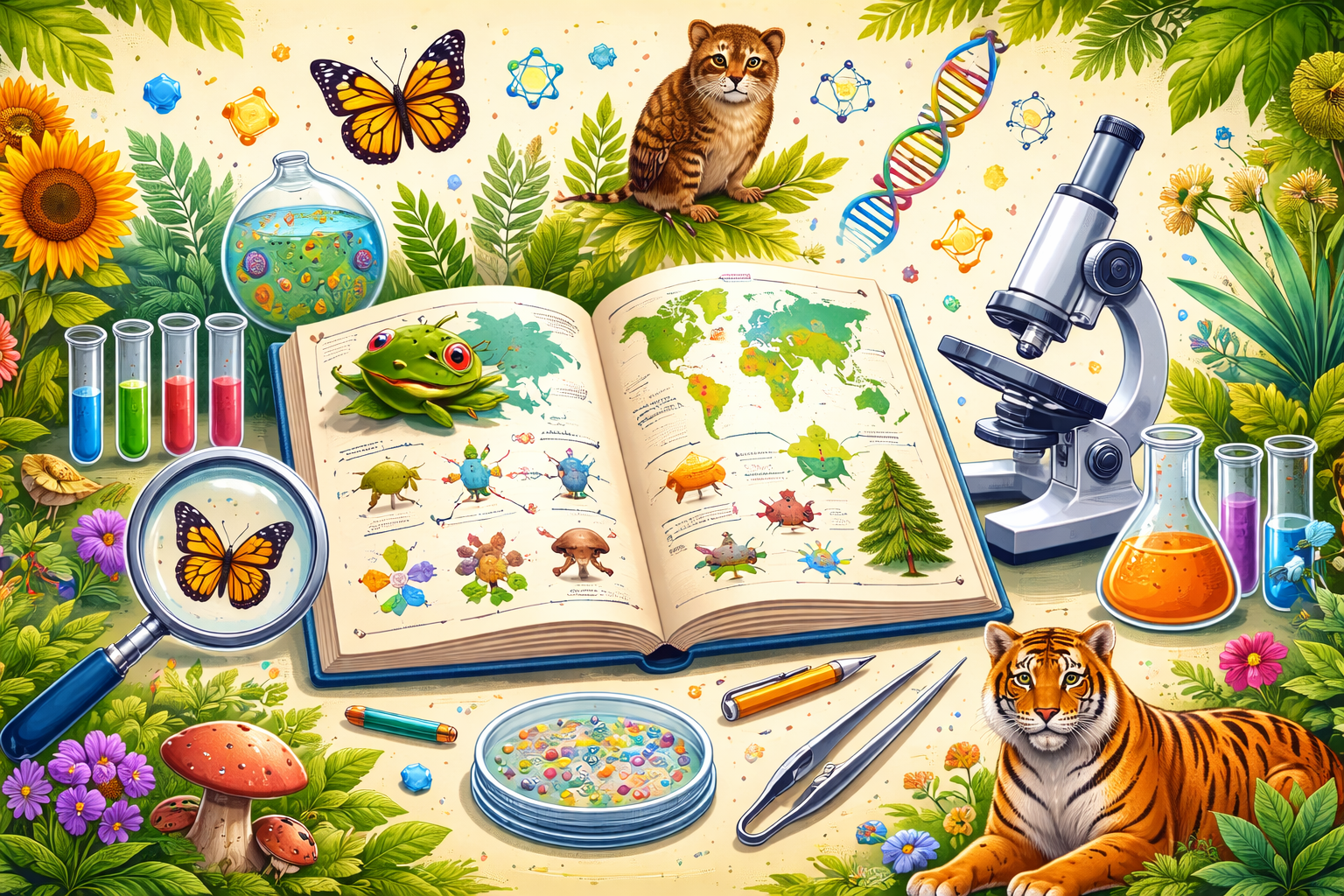
From a biological perspective, domestic animals and wild animals often belong to the same species, but they differ due to a process called domestication.
What Does Science Say?
- Wild animals are species that evolved naturally in the wild.
- Domestic animals are animals that humans have selectively bred over thousands of years.
For example:
- Dogs and wolves belong to the same biological family.
- Cows and wild aurochs share common ancestors.
Key Scientific Difference
| Aspect | Domestic Animals | Wild Animals |
|---|---|---|
| Origin | Bred by humans | Evolved naturally |
| Human control | High | None |
| Survival skills | Reduced | Highly developed |
Domestication changes genetics, behavior, and physical traits over generations.
Habitat and Distribution
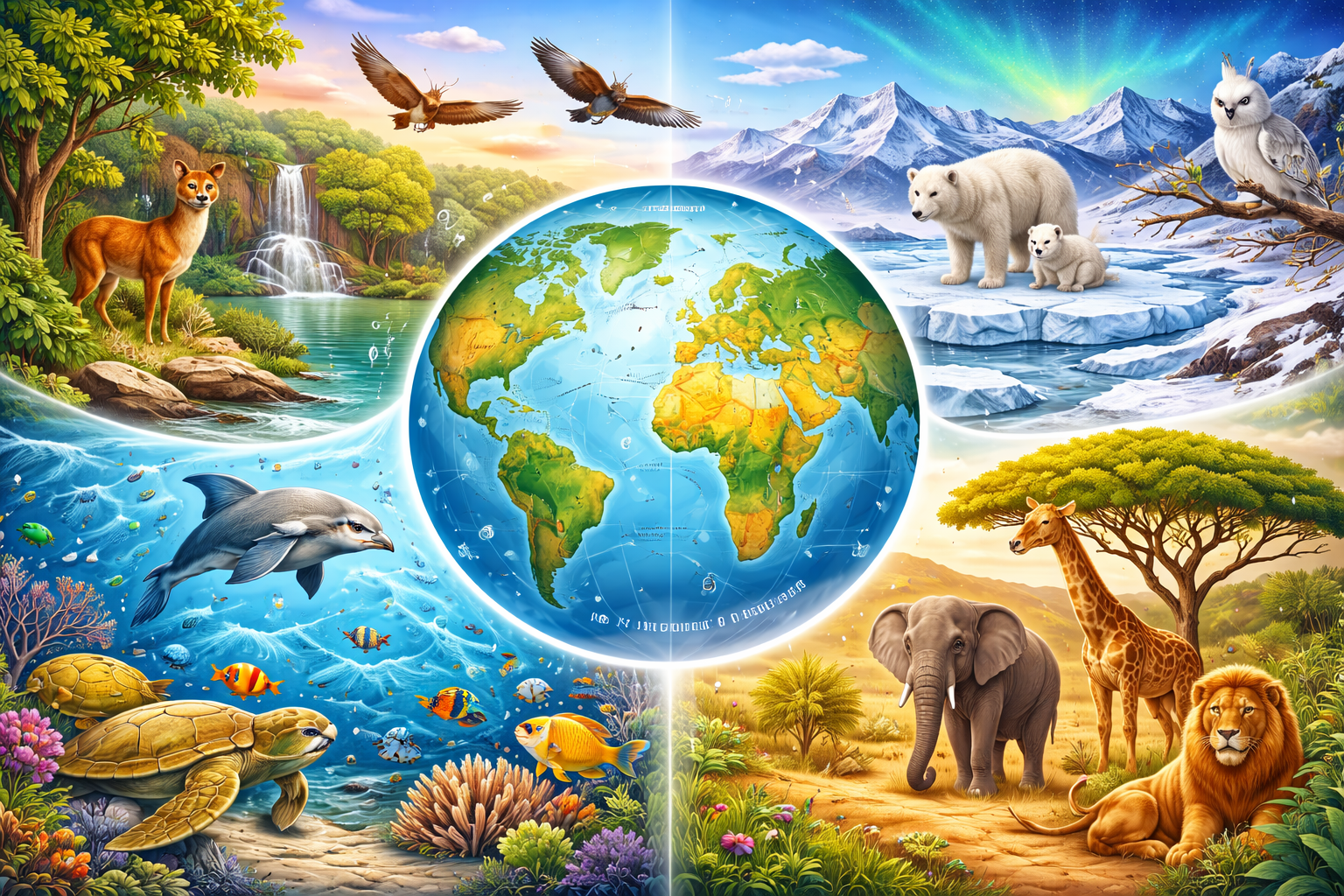
Habitat of Domestic Animals
Domestic animals usually live near or with humans. Their habitats are controlled and managed.
Common environments include:
- Homes and apartments
- Farms and ranches
- Zoos and shelters
They depend on humans for:
- Food
- Shelter
- Medical care
Habitat of Wild Animals
Wild animals live in natural ecosystems such as:
- Forests
- Deserts
- Oceans
- Grasslands
- Mountains
They are distributed across continents based on:
- Climate
- Food availability
- Natural predators
Unlike domestic animals, wild animals must adapt constantly to survive.
Physical Characteristics
Physical traits are another clear way to see the difference between domestic and wild animals.
Domestic Animals
Domestic animals often show traits that make them easier to handle:
- Smaller teeth or claws
- Softer fur or feathers
- Rounded facial features
- Variety of colors and sizes
These traits result from selective breeding for friendliness and usefulness.
Wild Animals
Wild animals are physically adapted for survival:
- Sharp teeth and claws
- Strong muscles
- Camouflage coloring
- Enhanced senses (hearing, smell, vision)
These features help them hunt, escape predators, and survive harsh conditions.
Diet and Feeding Habits
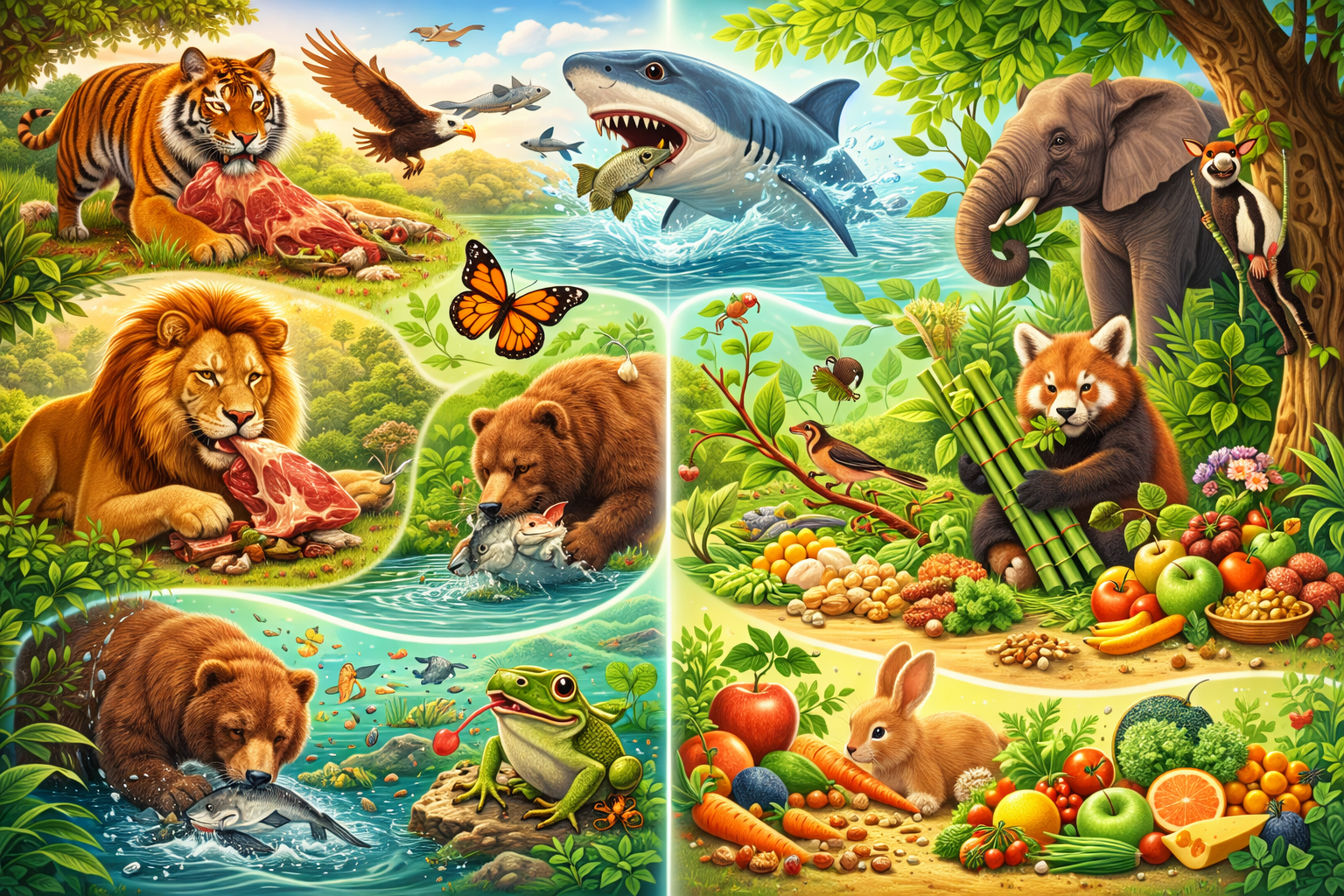
What Do Domestic Animals Eat?
Domestic animals eat food provided by humans, such as:
- Commercial pet food
- Grains and crops
- Cooked leftovers (for some species)
Their diet is:
- Regular
- Predictable
- Nutritionally balanced by humans
What Do Wild Animals Eat?
Wild animals must find their own food, including:
- Plants and fruits
- Other animals (prey)
- Insects or fish
They are classified as:
- Herbivores
- Carnivores
- Omnivores
Food availability can change daily, making survival challenging.
Behavior and Lifestyle
Behavior of Domestic Animals
Domestic animals are generally:
- Calm and social
- Comfortable around humans
- Trained to follow commands
Common lifestyle traits include:
- Sleeping in safe areas
- Living in groups chosen by humans
- Limited territory
Behavior of Wild Animals
Wild animals behave according to natural instincts:
- Hunt or forage daily
- Defend territory
- Avoid humans
Their lifestyle is shaped by:
- Survival needs
- Predator-prey relationships
- Seasonal changes
Wild animals can become dangerous if threatened or confined.
Reproduction and Lifespan
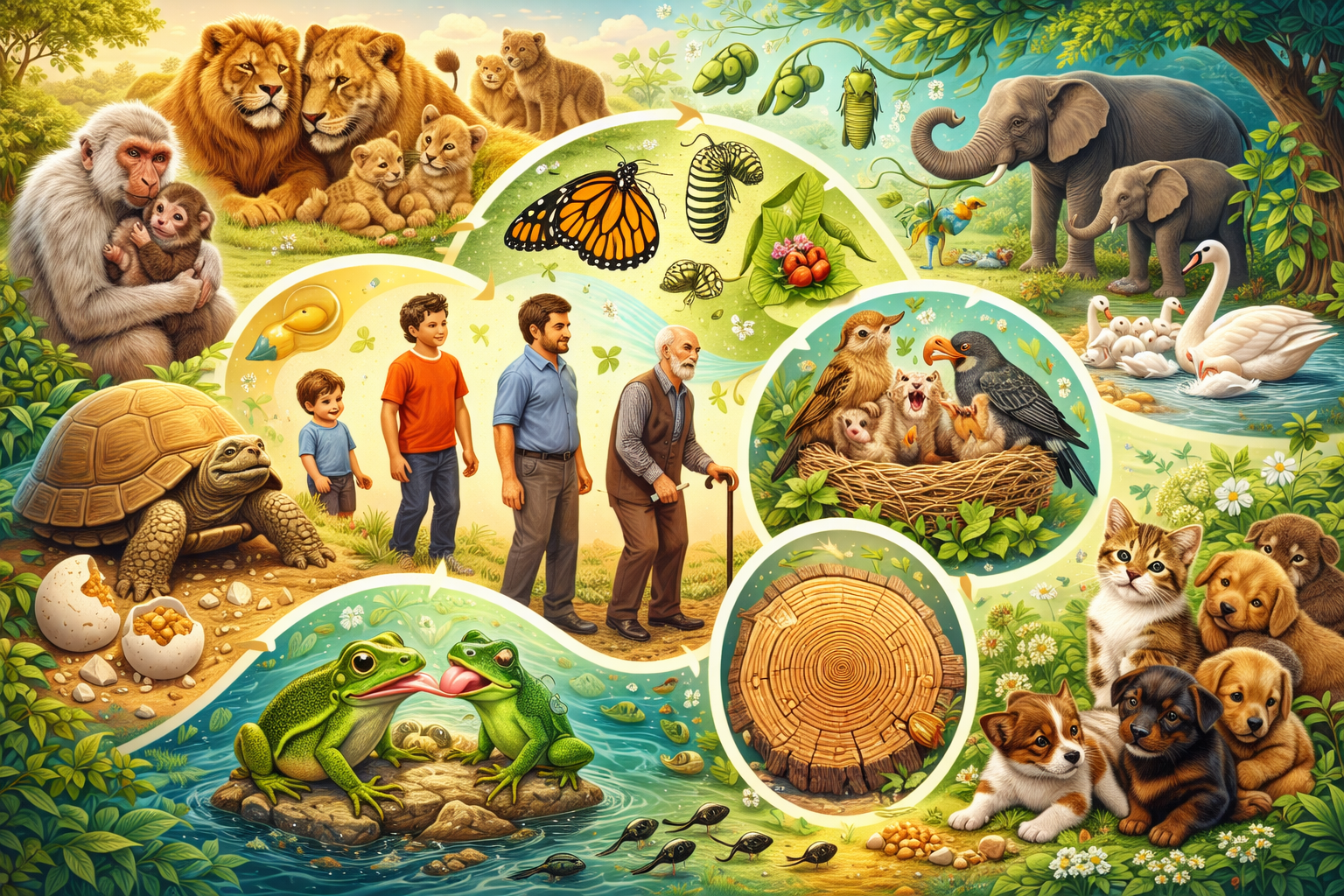
Reproduction in Domestic Animals
Humans often control breeding:
- Selected mating
- Veterinary assistance
- Protection during birth
This leads to:
- Higher survival rates
- Predictable reproduction cycles
Reproduction in Wild Animals
Wild animals reproduce naturally:
- No human intervention
- High risk for young animals
- Survival depends on environment
Lifespan Comparison
| Factor | Domestic Animals | Wild Animals |
|---|---|---|
| Lifespan | Often longer | Often shorter |
| Medical care | Regular | None |
| Major threats | Disease, neglect | Predators, starvation |
Domestic animals usually live longer due to care and protection.
Interesting Facts About Domestic and Wild Animals
- Some domestic animals cannot survive in the wild at all.
- Wild animals rarely live long in captivity without specialized care.
- Domestication can change brain size over generations.
- Wild animals play a key role in maintaining ecosystems.
- Domestic animals often communicate better with humans.
- Some animals exist in both wild and domestic forms.
- Fear of humans is a natural survival trait in wild animals.
Conservation Status and Threats
Threats to Domestic Animals
Domestic animals face risks such as:
- Abandonment
- Overbreeding
- Poor living conditions
Responsible ownership is essential.
Threats to Wild Animals
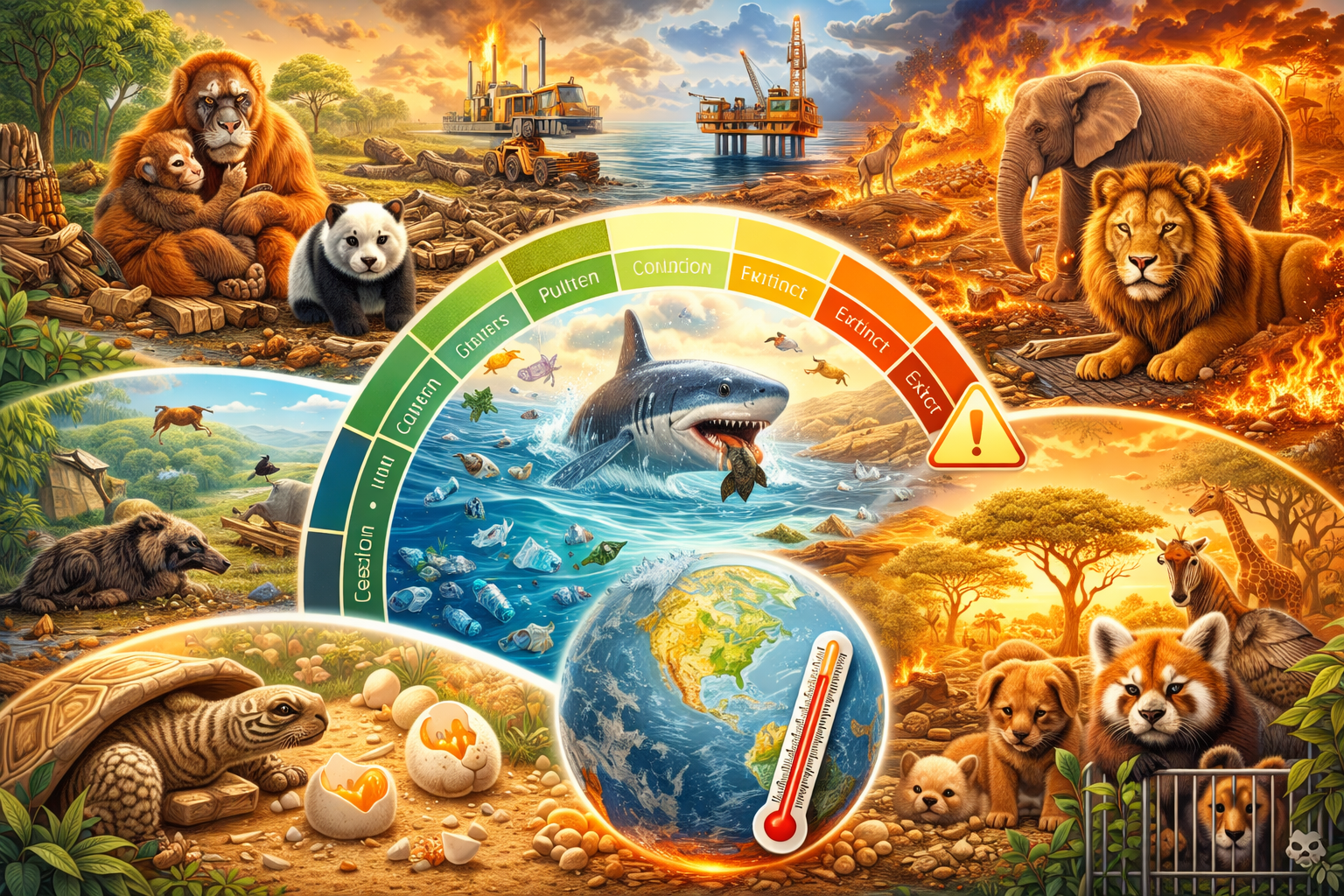
Wild animals face more serious global threats:
- Habitat destruction
- Climate change
- Illegal hunting and wildlife trade
- Pollution
Conservation Efforts
Protecting wild animals involves:
- Wildlife reserves
- Conservation laws
- Education and awareness
- Ethical ecotourism
Understanding the difference between domestic and wild animals helps promote better protection strategies.
Frequently Asked Questions (FAQ)
1. What is the main difference between domestic and wild animals?
The main difference is that domestic animals are bred and cared for by humans, while wild animals live independently in nature.
2. Can a wild animal become a domestic animal?
No. Individual wild animals can be tamed, but true domestication takes many generations.
3. Are domestic animals happier than wild animals?
They are happier in environments suited to their nature. Domestic animals thrive with humans, while wild animals thrive in the wild.
4. Is it legal to keep wild animals as pets?
In most US and EU countries, keeping wild animals as pets is illegal or heavily regulated.
5. Why are wild animals important to ecosystems?
Wild animals help maintain balance by controlling populations, spreading seeds, and supporting biodiversity.
Final Note
The difference between domestic and wild animals goes far beyond where they live. It reflects evolution, human influence, and survival strategies shaped over thousands of years. By understanding these differences, we can become more responsible pet owners and stronger supporters of wildlife conservation.