
Why Do Dogs Bark at Night? Understanding This Common Animal Behavior
Dogs barking after dark is one of the most common—and frustrating—behaviors reported by pet owners. If you’ve ever wondered why dogs bark at night, you’re not alone. This nighttime behavior affects not only sleep quality but also a dog’s emotional well-being and the harmony of the household.
In this article, we’ll explore why dogs bark at night, what this behavior means, what triggers it, and how humans can respond in a calm, effective, and animal-friendly way. Understanding the reason behind the bark is the first step toward solving the problem.
Introduction: Why Do Dogs Bark at Night and Why It Matters

Dogs are naturally alert animals, and nighttime often heightens their senses. When dogs bark at night, they are usually responding to something they hear, smell, feel, or emotionally experience.
This behavior matters because:
- It can signal fear, anxiety, boredom, or discomfort
- It may indicate environmental stress or unmet needs
- Chronic nighttime barking can affect health, training, and relationships
Understanding why dogs bark at night helps owners respond with empathy rather than frustration.
What Is This Behavior? (Simple Explanation)
Night barking is a vocal communication behavior where dogs bark, howl, or whine during evening or nighttime hours.
Dogs use barking to:
- Warn of potential danger
- Communicate discomfort or excitement
- Express emotional states like fear or loneliness
At night, the world is quieter—so sounds and smells become more noticeable, making dogs more reactive.
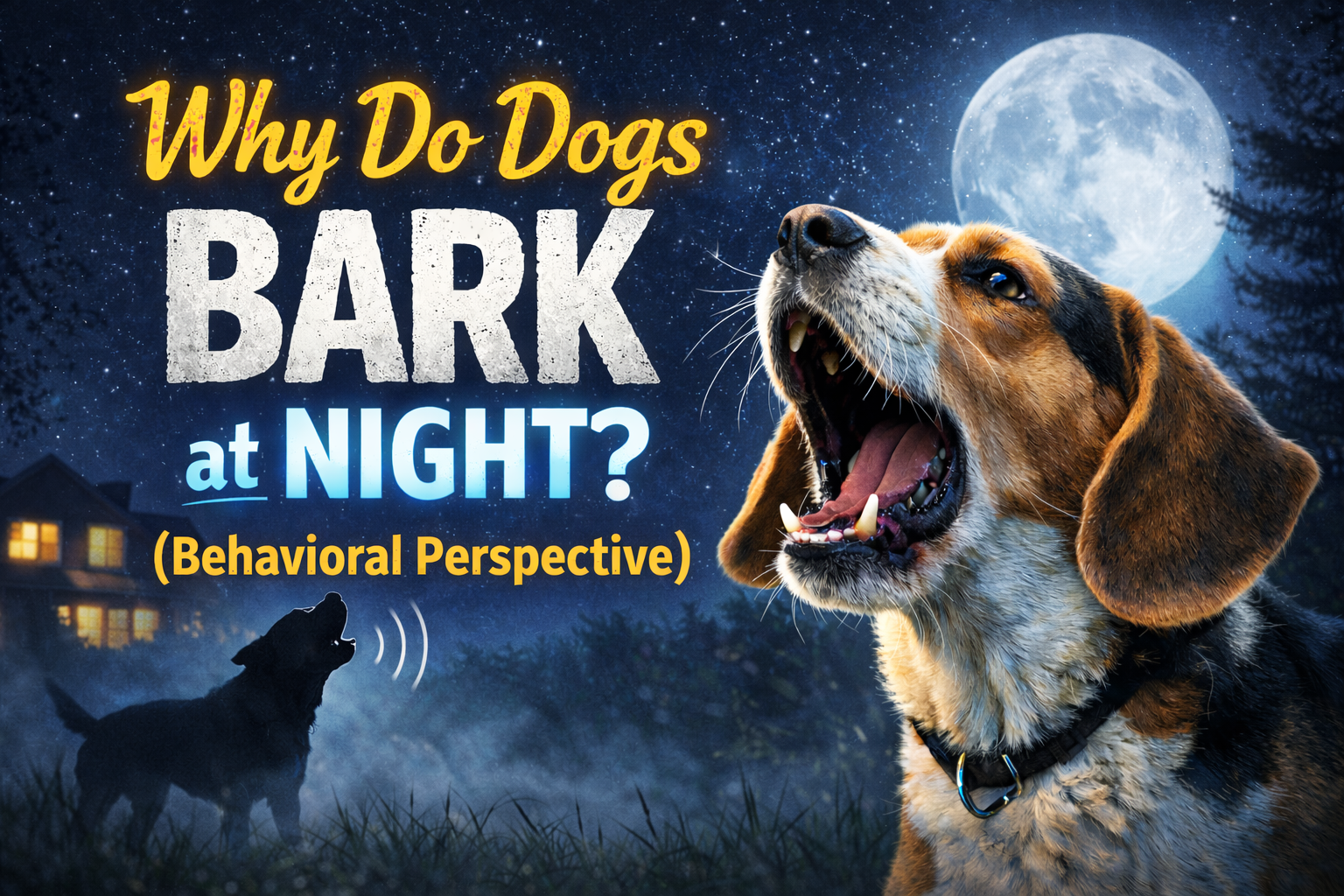
Why Do Dogs Bark at Night? (Behavioral Perspective)
1. Dogs Are Naturally Alert at Night
Dogs evolved to guard territory and stay alert during low-light hours. Nighttime activates their protective instincts, especially in quiet environments.
2. Heightened Senses After Dark
Dogs hear frequencies humans can’t. At night, reduced background noise allows them to detect:
- Distant footsteps
- Wildlife movement
- Cars, wind, or unfamiliar sounds
These stimuli can easily trigger barking.
3. Emotional and Psychological Factors
Dogs may bark at night due to:
- Separation anxiety
- Fear of darkness
- Loneliness
- Stress from changes in routine
Common Triggers and Causes of Night Barking
Environmental Triggers
- Passing cars or people
- Noises from neighbors
- Wild animals (raccoons, foxes, cats)
- Wind, rain, or tree movement
Physical Needs
- Needing to urinate
- Hunger or thirst
- Pain or discomfort
- Temperature changes
Behavioral Causes
- Lack of exercise during the day
- Boredom or excess energy
- Reinforced barking habits
- Inconsistent training
Emotional Causes
- Anxiety
- Fear of unfamiliar sounds
- Loneliness or isolation
- Past trauma
Examples in Different Animals (Pets & Wild Animals)

Night vocalization is not unique to dogs.
Domestic Animals
- Cats may meow at night due to hunting instincts or boredom
- Dogs bark or howl to alert or communicate
Wild Animals
- Wolves howl to communicate with the pack
- Coyotes vocalize to mark territory
- Owls call to attract mates or warn rivals
These behaviors show that nighttime vocalization is biologically normal, not misbehavior.
Is This Behavior Normal or a Problem?
When It’s Normal
Night barking is usually normal if:
- It happens occasionally
- It stops when the stimulus is gone
- The dog is otherwise healthy and calm
When It Becomes a Problem
It may be a concern if:
- Barking happens every night
- It escalates over time
- The dog seems anxious or distressed
- It disrupts sleep or daily routines
Persistent night barking may signal unmet needs or emotional stress.
How Humans Should Respond (Care, Training, Safety Tips)
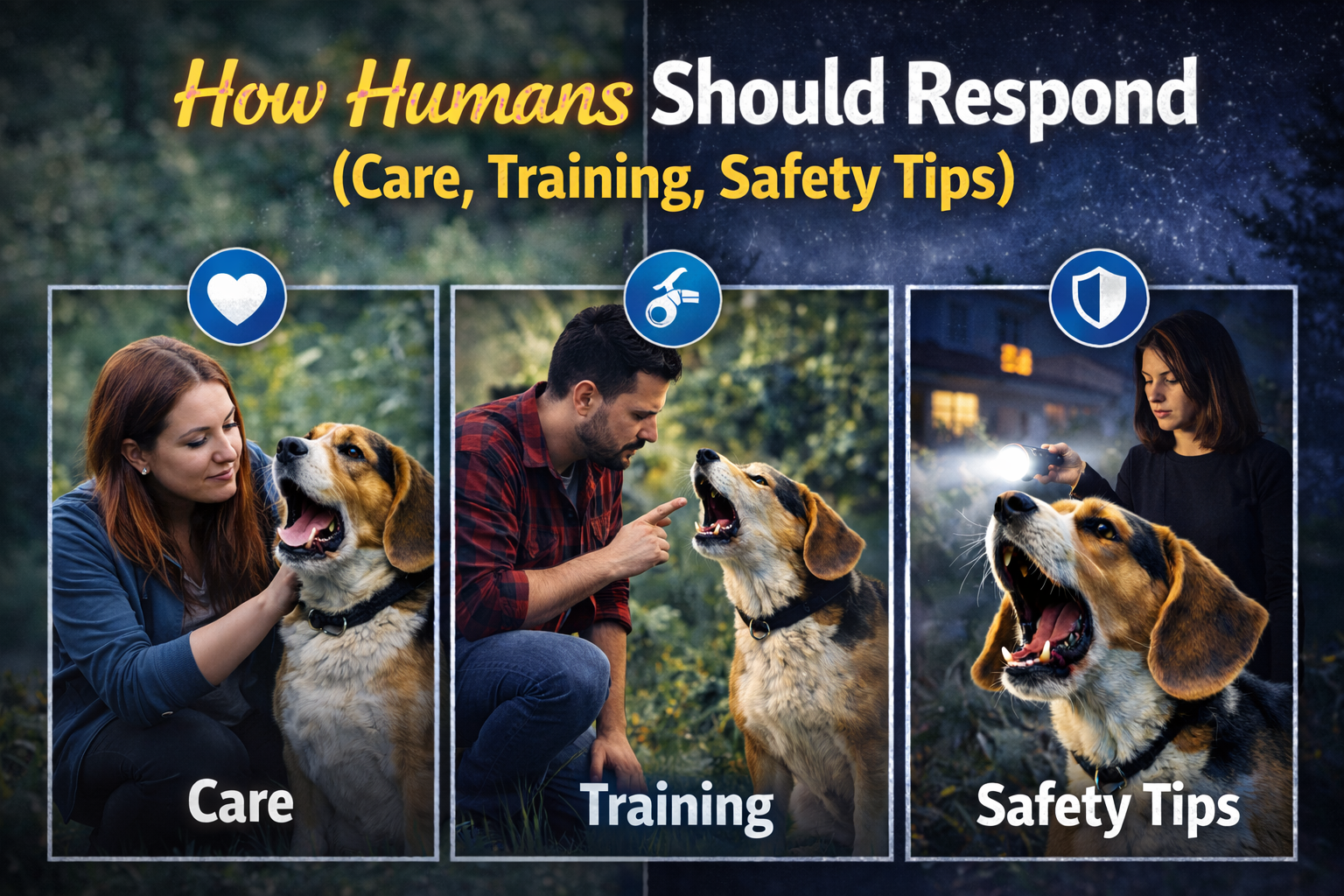
1. Identify the Trigger
Observe:
- Time of barking
- Direction the dog faces
- Sounds or smells present
Understanding the trigger helps you fix the root cause.
2. Meet Physical and Mental Needs
Before bedtime:
- Provide a long walk or play session
- Offer mental stimulation (puzzle toys)
- Ensure food and water needs are met
A tired dog is a calmer dog.
3. Create a Calm Sleep Environment
- Close windows or curtains
- Use white noise to block outside sounds
- Provide a comfortable sleeping space
4. Avoid Punishment
Punishing barking:
- Increases fear and anxiety
- Damages trust
- Often makes behavior worse
Instead, use positive reinforcement.
5. Train Calm Nighttime Behavior
- Reward quiet behavior
- Teach “quiet” commands gently
- Maintain a consistent bedtime routine
6. When to Seek Professional Help
Consult a veterinarian or behaviorist if:
- Barking starts suddenly
- Your dog shows signs of pain
- Anxiety is severe or worsening
Interesting Behavior Facts About Night Barking
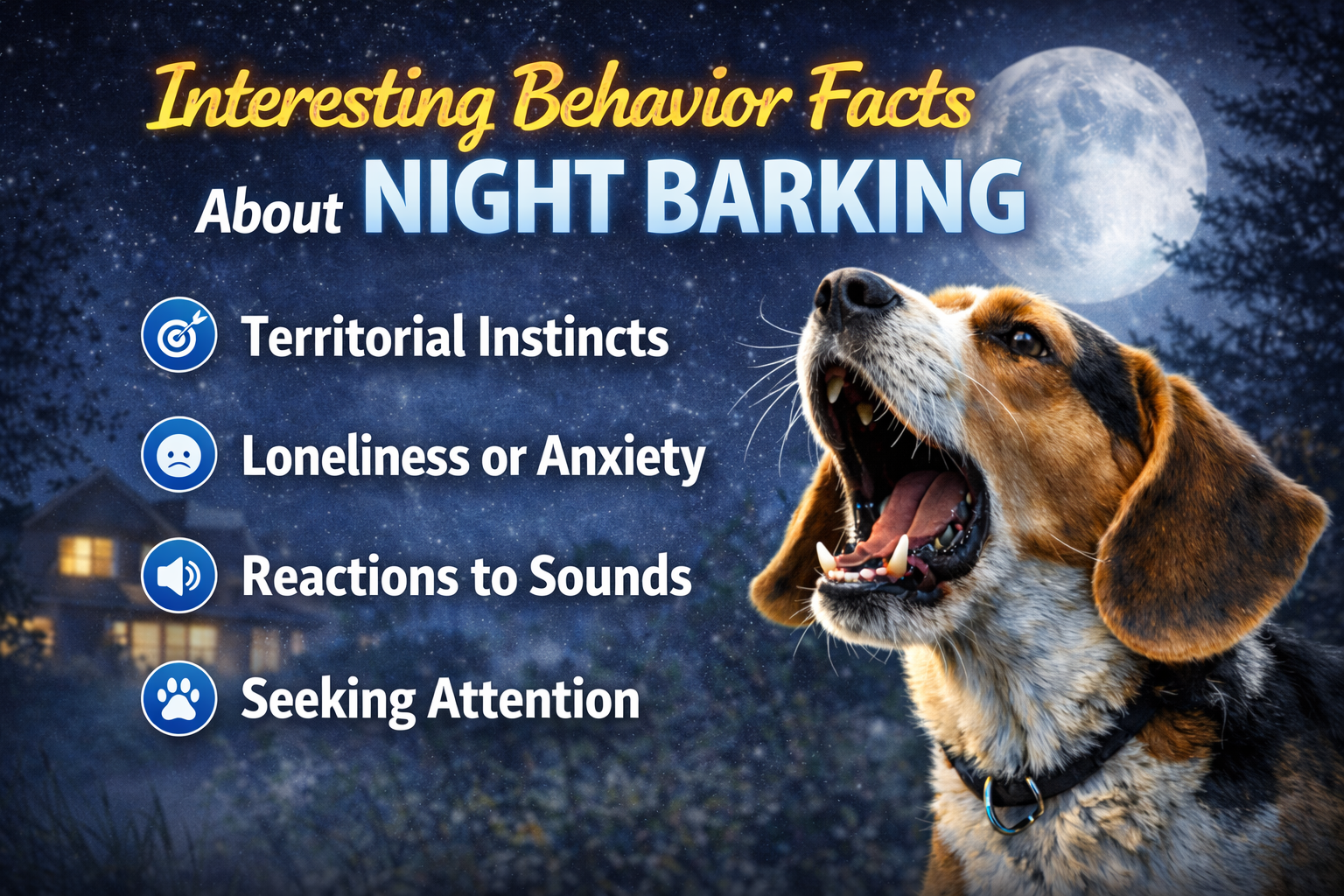
- Dogs hear sounds up to four times farther than humans
- Nighttime barking often increases during full moons due to light changes
- Senior dogs may bark more due to cognitive changes
- Puppies bark at night as part of early development and learning
Frequently Asked Questions (FAQ)
1. Why do dogs bark at night for no reason?
Dogs rarely bark without reason. The cause may be a sound, smell, fear, or internal discomfort humans can’t detect.
2. Is it normal for puppies to bark at night?
Yes. Puppies often bark at night due to separation anxiety, unfamiliar surroundings, or needing comfort.
3. Should I ignore my dog when barking at night?
Ignoring can help only if barking is attention-seeking. If barking is fear-based or physical, address the cause instead.
4. Can exercise reduce nighttime barking?
Absolutely. Adequate daily exercise reduces excess energy and anxiety, leading to calmer nights.
5. When should I worry about nighttime barking?
If barking is sudden, constant, or paired with distress signs, consult a vet or behavior specialist.
Conclusion & Key Takeaways
Understanding why dogs bark at night helps transform frustration into compassion. Night barking is usually a form of communication—not bad behavior.
Key Takeaways:
- Night barking is often normal and instinctive
- Common causes include sounds, anxiety, boredom, or unmet needs
- Calm routines, exercise, and positive training are effective solutions
- Persistent barking deserves professional attention
When humans respond with patience and understanding, dogs feel safer—and quieter nights naturally follow.